
Last updated November 25, 2026
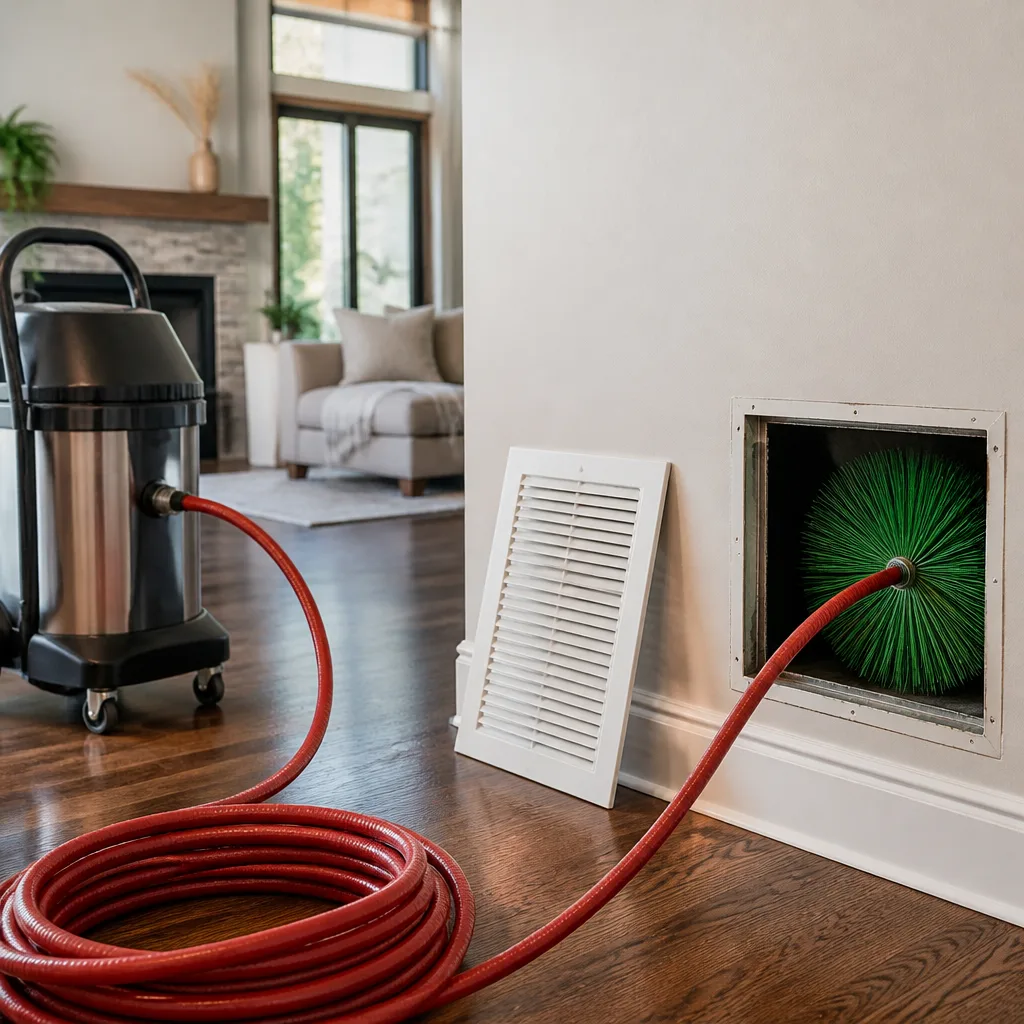 Whole-home duct cleaning
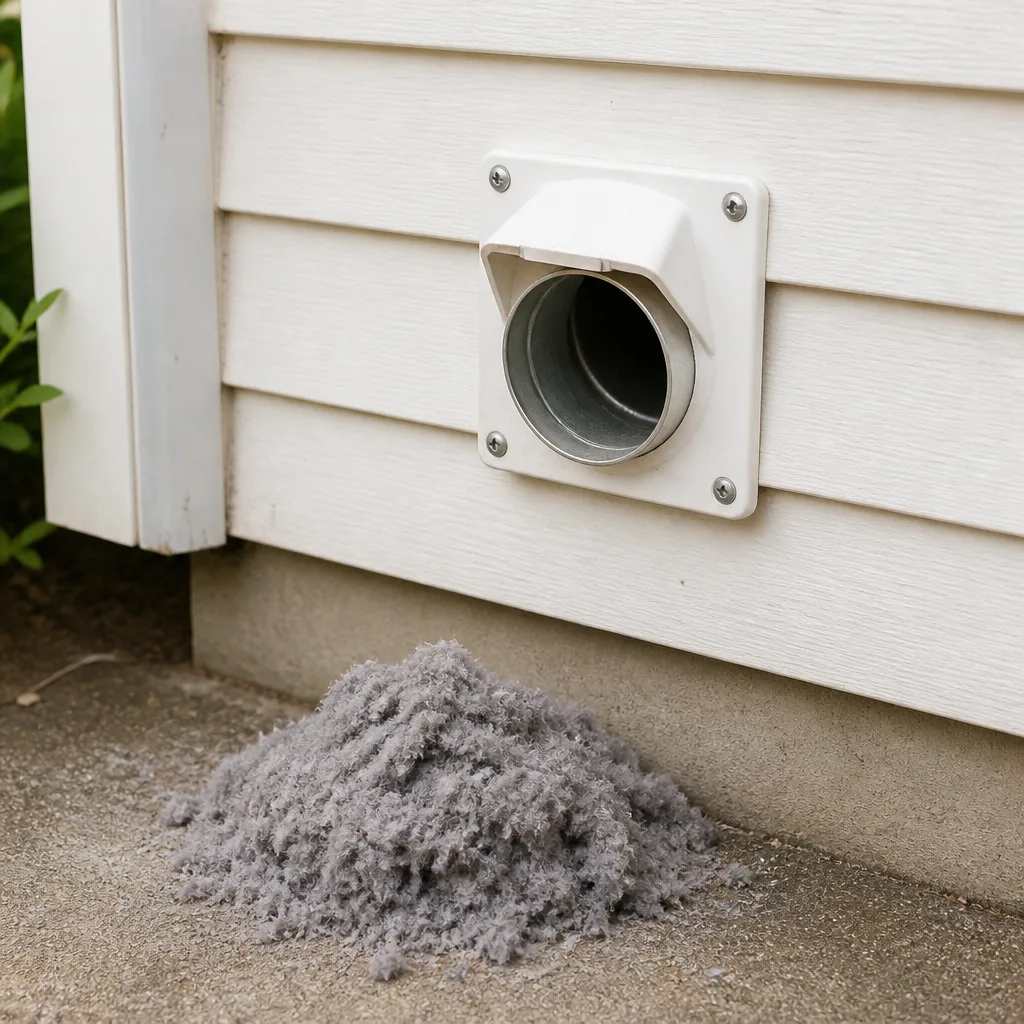 Dryer vent cleaning
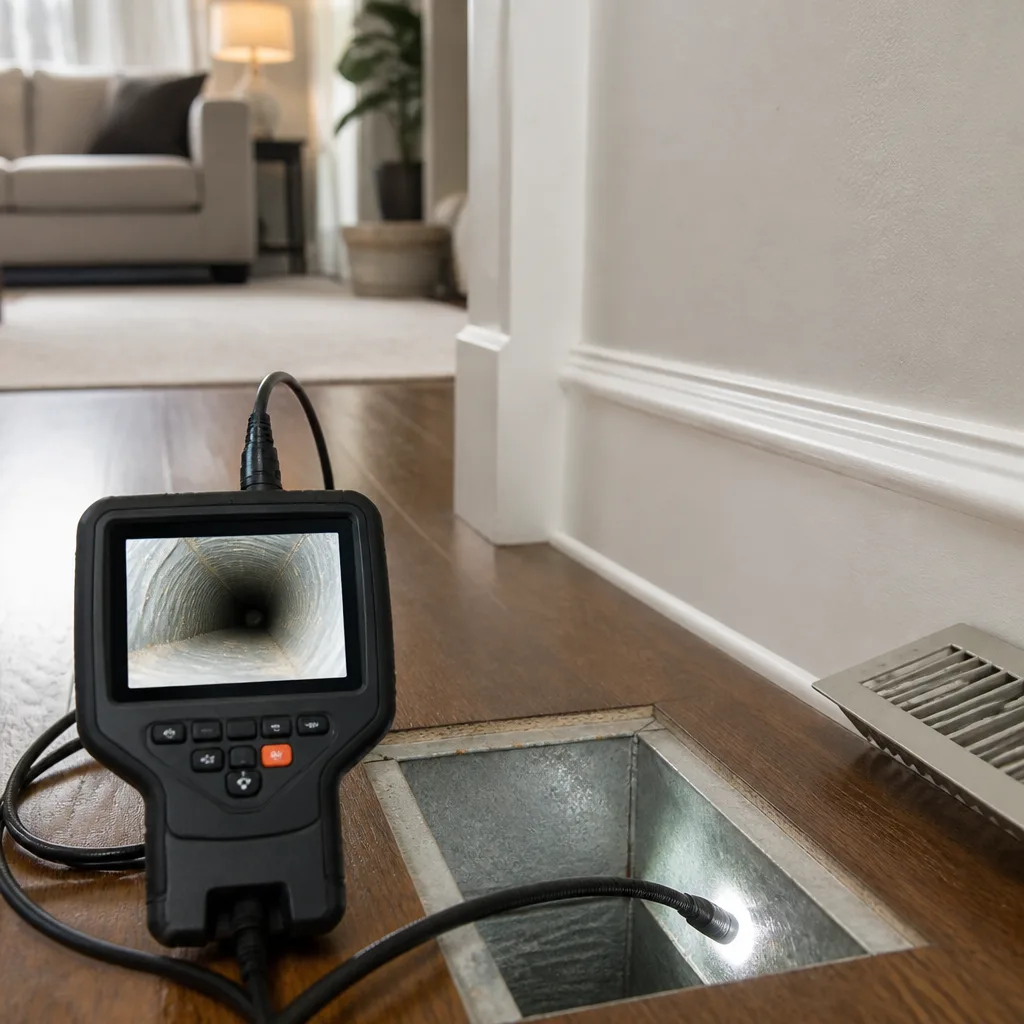 Camera inspection
 Sanitizing & deodorizing
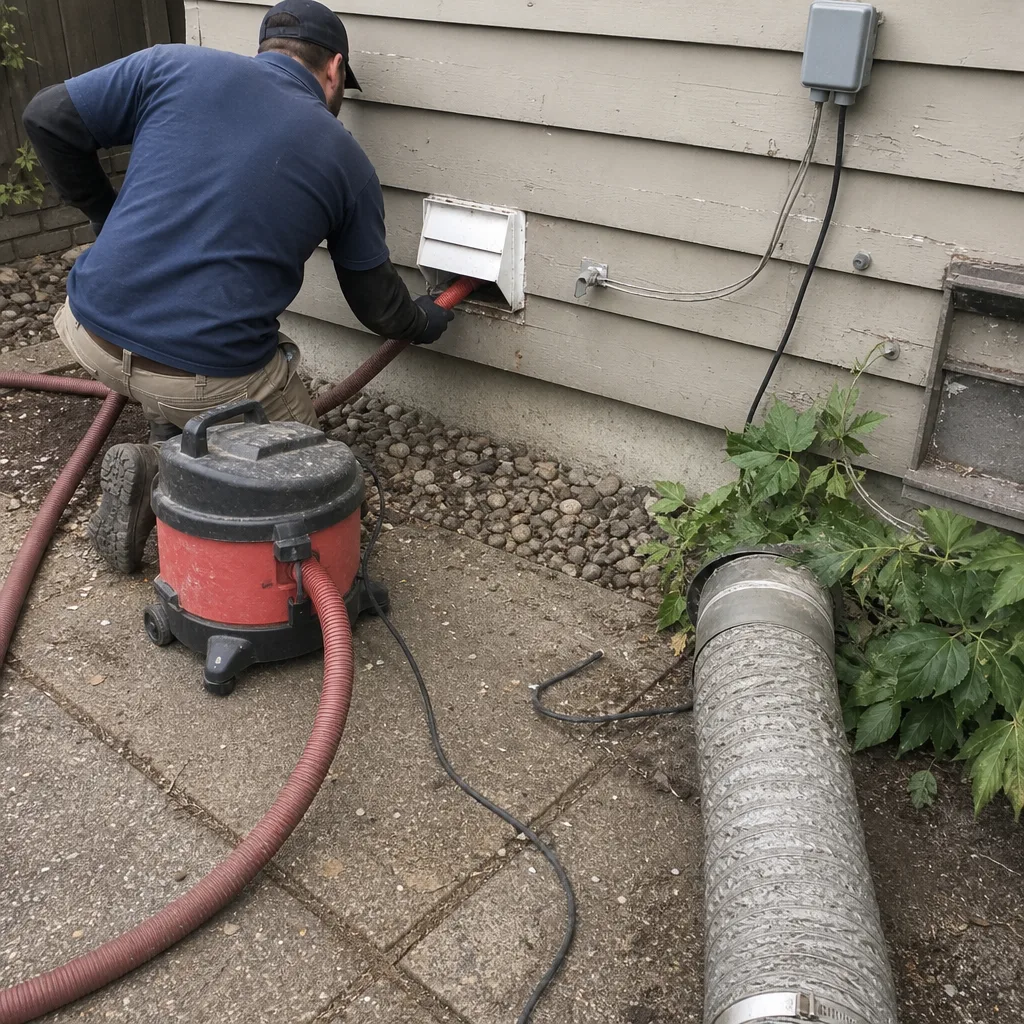
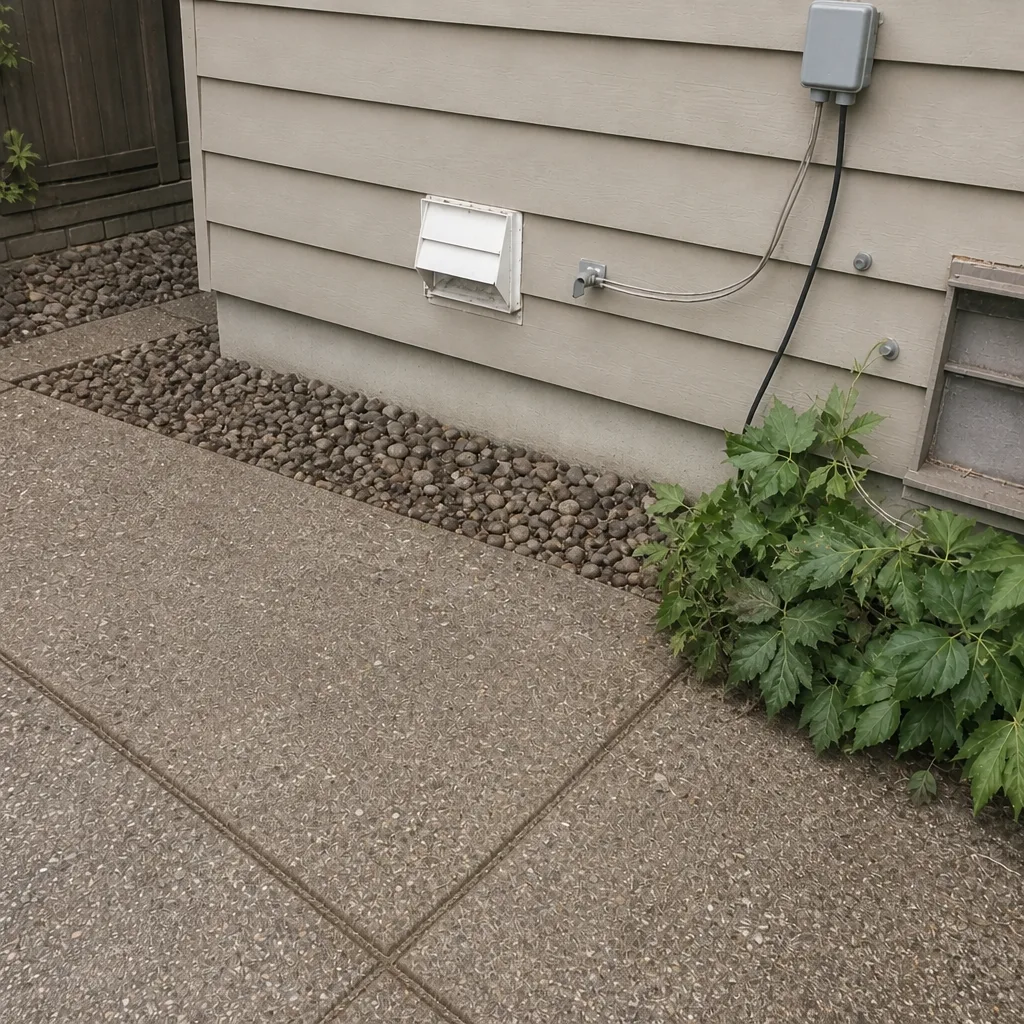
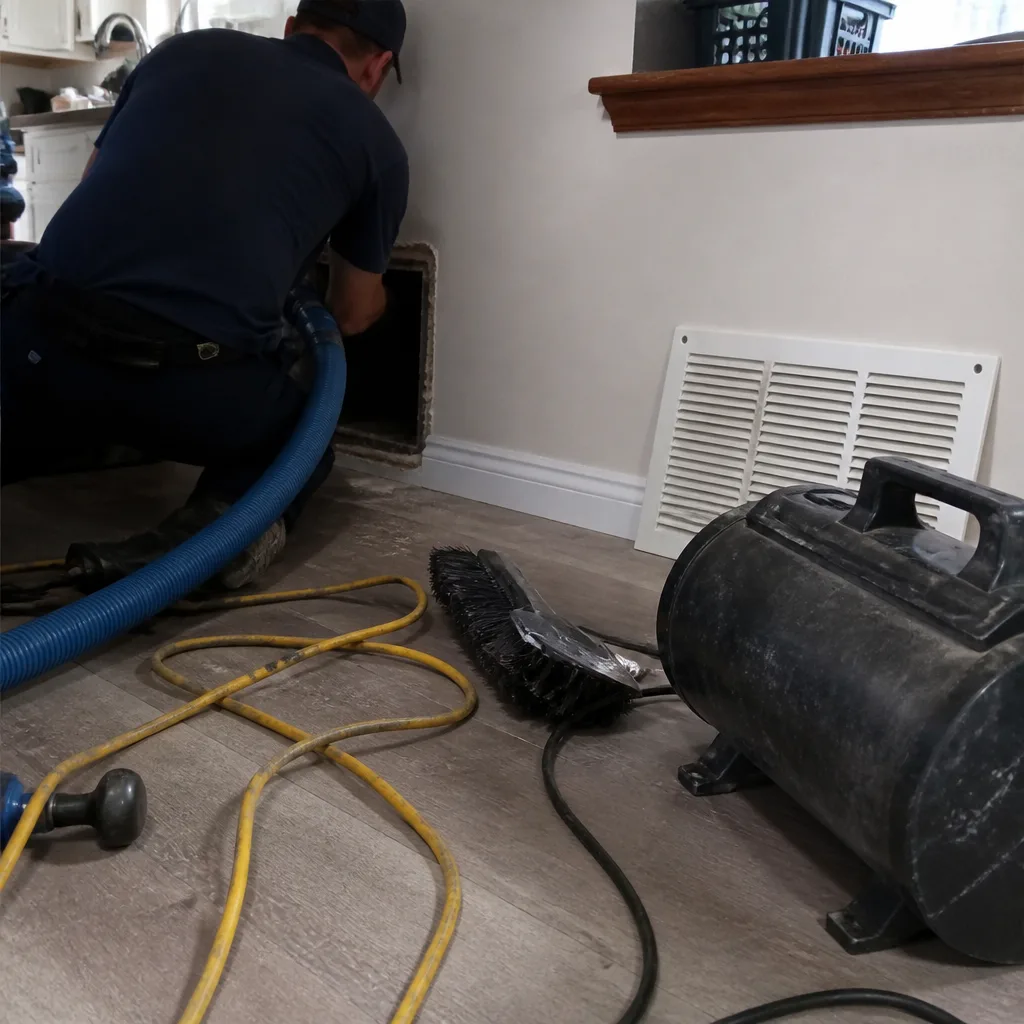
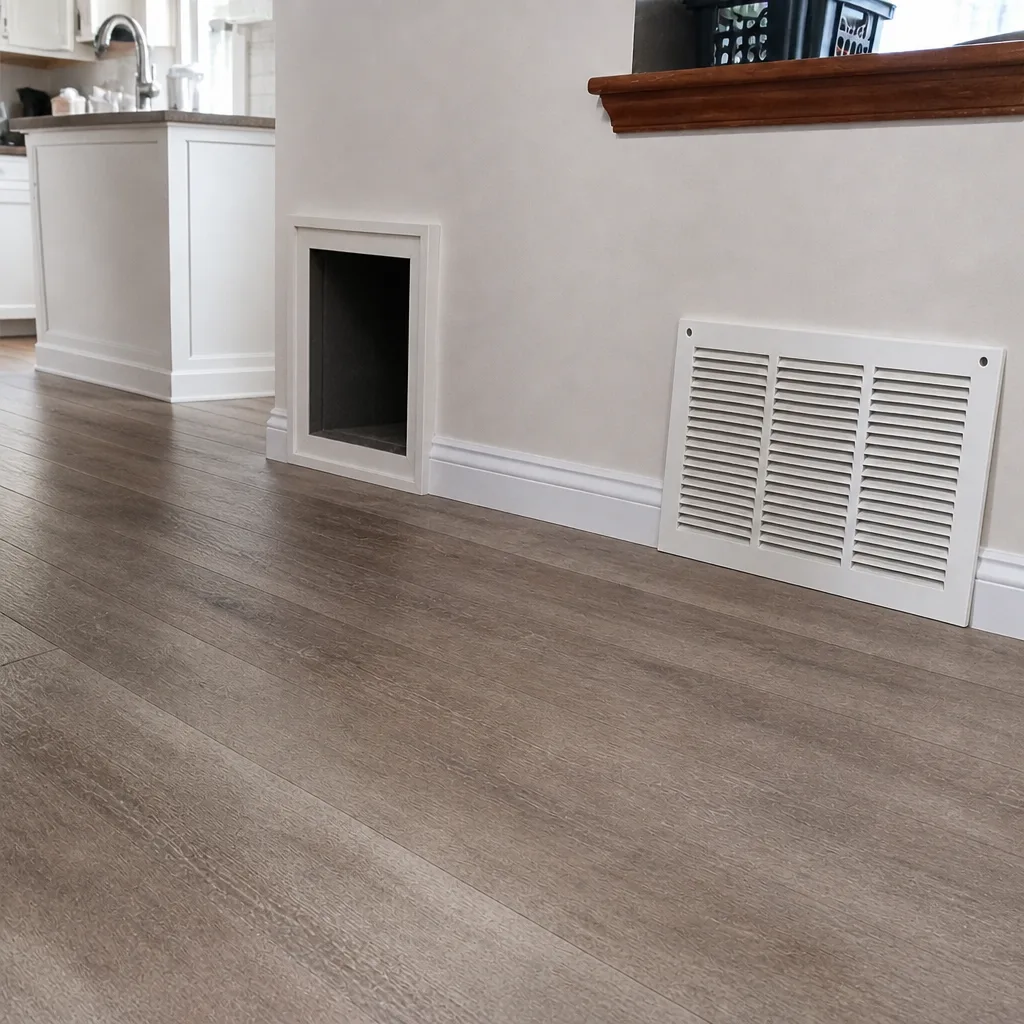
Whole-system duct and dryer vent check with before-and-after photos - you see exactly what came out of your vents
That "$99 whole-house special" is a bait ad - the real number appears once they are in your hallway, or the "clean" is a shop-vac at the register. We photograph the inside of your ducts before and after instead.
DIY vs Professional Air Duct Cleaning: The Marysville Homeowner’s Decision Guide
Here’s a number worth sitting with: a homeowner with a shop vacuum and a brush attachment can clean roughly 18 inches into a supply register. That’s it. The contamination that actually affects the air your family breathes sits in the trunk lines, the return plenum, and the blower compartment – none of which are reachable without specialized access and negative-pressure equipment. This isn’t a knock on DIY effort. It’s a geometry problem. In this Marysville guide, we’ll map the duct system section by section, sort what DIY genuinely accomplishes from what it can’t touch, and give you four clear conditions that settle the decision regardless of how hard you’re willing to work.
Quick Answer
DIY air duct cleaning cleans surface debris at the registers and grilles you can reach – about the first 18 inches of each branch – and it can reduce how often you need a professional cleaning if you keep up with it. It does not clean the trunk lines, return plenums, or air handler, and running a vacuum without HEPA-rated negative-pressure containment can redistribute fine particulate through the house instead of removing it. Professional cleaning reaches those hidden sections with contact-brush agitation and captures the debris at the source.
Styles & brands we work with
- Whole-home duct cleaning
- Dryer vent cleaning
- Camera inspection
- Sanitizing & deodorizing
Table of Contents
- Mapping Your Duct System: What You Can Reach and What You Can’t
- What a DIY Clean Actually Accomplishes
- Why DIY Without Containment Can Make Things Worse
- When DIY Maintenance Genuinely Reduces Professional Cleanings
- The Four Conditions Where DIY Is Not Enough
- What Professional Equipment Actually Does Differently
- Marysville-Specific Considerations
- Cost vs. Value: An Honest Comparison
Mapping Your Duct System: What You Can Reach and What You Can’t
Most homeowners picture a duct system as a set of tubes running through the walls. In reality, it’s a tree with a trunk, major limbs, and small branches, and where contamination builds depends heavily on which part of the tree you’re looking at. Understanding this layout is the foundation of any honest DIY-versus-professional decision in Marysville, because it tells you exactly where your reach ends.
Here’s how the system breaks down, from most accessible to least:
- Supply registers and grilles (DIY-accessible). The louvered covers in each room. You can remove them, vacuum the visible surface, wash them in a sink, and reach roughly 18 inches into the branch duct behind them with a brush.
- Return grilles (DIY-accessible). The larger grilles that pull air back into the system. Same story – reachable surface, shallow access.
- Branch ducts (partially DIY-accessible). The small runs that feed individual rooms. You might reach the first foot or two; the rest is inaccessible without rotary equipment.
- Trunk lines (professional access required). The main rectangular or large round runs that distribute air through the home. Contamination accumulates here because volume is highest and airflow is slowest at the edges. Reaching it requires cutting access points or using existing ones with rotary brush systems.
- Return plenum and air handler (professional access required). The return plenum is where all the return air converges before entering the furnace or air handler. It’s often the dirtiest section of the entire system, and it’s the section most tightly sealed behind panels and safety interlocks.
- Blower compartment and evaporator coil (professional access required, and behind electrical safety barriers). The blower wheel and the coil sit inside the air handler. Any dust that makes it past the filter coats these components, reducing airflow and efficiency. Accessing them safely requires powering down the system at the disconnect and removing panels.
In our experience across Marysville homes, the pattern repeats: the sections you can reach stay relatively clean because they’re easy to reach and easy to see. The sections you can’t reach carry the load. When you pull a supply grille and it looks fine, you’re looking at the cleanest part of the system.
What a DIY Clean Actually Accomplishes
Let’s give DIY its due, because dismissing it entirely is just as misleading as overstating it. A homeowner who cleans grilles and vacuums the reachable first foot of each branch is doing real maintenance, and it produces measurable results in a few specific ways.
A register-and-grille cleaning removes the buildup of dust, lint, and pet hair that collects on the louvers themselves. That visible layer matters – it’s the first thing air passes through, and grime on a grille sheds particulate back into the room whenever the system cycles. Washing grilles in warm soapy water and drying them fully is genuinely useful, and it’s a task you can do without special tools.
Vacuums with brush attachments reach the first section of each branch duct, and that first section is where the majority of lint and loose dust tends to accumulate because airflow is fastest right at the register face. Removing that material reduces what gets pushed back into the room on startup.
What DIY doesn’t do:
- It doesn’t remove contamination from trunk lines or return plenums.
- It doesn’t agitate and capture the material bonded to duct walls, which requires contact brushes.
- It doesn’t clean the blower wheel or evaporator coil, which are behind panels and safety interlocks.
- It doesn’t provide negative-pressure containment, so fine dust you disturb can end up airborne in the house rather than captured.
- It doesn’t verify results with before-and-after photo documentation.
So when a Marysville homeowner asks us whether DIY is worth doing at all: yes, as maintenance between professional cleanings. Not as a substitute for one. Those are two different activities serving two different purposes, and treating them as interchangeable is where most of the confusion starts.
Why DIY Without Containment Can Make Things Worse
This is the part of the DIY conversation most guides skip, and it’s the part that matters most for anyone with allergies or a recent renovation. Cleaning a duct without negative-pressure containment doesn’t just leave contamination behind – it can move it.
Here’s the mechanism. Fine particulate in a duct system sits settled on duct walls in a more-or-less stable state until something disturbs it. A vacuum wand or brush agitates that material. Without a HEPA-rated negative-air machine pulling air out of the system and capturing it at the filter, the dislodged dust has nowhere to go but into the airstream, the room, or the rest of the house. You’re not removing it; you’re redistributing it.
The professional setup reverses the flow. A Nikro HEPA-rated negative-air machine draws the duct system into negative pressure, meaning air leaks inward through any gap in the ductwork rather than outward into the living space. Debris dislodged by a Rotobrush contact-brush system travels toward the HEPA filter, where it’s captured at the point of origin. That’s what “HEPA-rated containment” means in practice: the dust that leaves the duct walls ends up in a filter, not in your bedroom.
This matters more in Marysville than it might elsewhere because so many homes here are tightly built and heavily insulated for cool damp winters. A tightly sealed house with a fresh renovation – drywall dust, sawdust, insulation fibers in the return – is exactly the scenario where a shop vac and no containment can turn a well-intentioned cleaning into an airborne event. If there’s been any drywall work, flooring replacement, or insulation disturbance in the last year, that’s a containment situation, not a vacuum situation.
There’s a safety note here too, and it’s not a small one. The air handler contains electrical components and, if your system is a gas furnace, combustion components. Removing panels and reaching into those areas is not a homeowner job. A trained technician powers the system down at the disconnect, works safely around the electrical and gas sections, and reassembles everything to proper spec. We’d rather walk you through the system on paper than have you reaching toward a control board with a shop vac.
When DIY Maintenance Genuinely Reduces Professional Cleanings
DIY isn’t useless maintenance – done well, it stretches the interval between professional cleanings. The key word is “well.” Following a consistent simple routine produces real results, and it’s a routine most Marysville homeowners can keep up with in under an hour twice a year.
Here’s a maintenance sequence that actually works:
- Change the filter on schedule. A 1-inch pleated filter typically needs replacing every 1 to 3 months depending on pets, dust, and season. A clogged filter is the single largest driver of dust getting past into the system. Check monthly, replace when you can’t see light through it.
- Vacuum and wash the supply and return grilles twice a year. Remove each grille, vacuum the visible surface, then wash it in warm soapy water and let it dry fully before reinstalling. Do this twice a year, or quarterly if you have shedding pets.
- Vacuum the reachable first foot of each branch duct. Use a crevice tool or a brush attachment. Don’t shove the hose hard or far – you’re removing loose surface material, not force-cleaning the system.
- Keep return openings unobstructed. Don’t stack boxes, furniture, or bedding in front of return grilles. Restricted return airflow forces the blower to pull harder and can pull dust in through gaps in the ductwork.
- Wipe down the register faces and the surrounding wall trim. Dust clings to surfaces near registers and sheds back into the airstream when the system cycles.
- Watch for moisture. Any condensation on duct surfaces, in the air handler, or around vents is a sign of a problem you can’t fix with a vacuum. Shut the system down and call a professional.
Do those six things, and your professional cleanings stay on a routine interval rather than accelerating. Skip them, and even professional cleaning has less runway before the system loads up again. In our experience, this is where DIY earns its keep – as preventive maintenance, not as an alternative to the deep clean.
The Four Conditions Where DIY Is Not Enough
If you walk through this whole guide and remember one section, this is the one. There are four conditions that make professional cleaning the correct choice no matter how much elbow grease you’re prepared to put in. Each one describes something DIY physically can’t address.
- Visible contamination in the return plenum or on the blower wheel. If you can see buildup inside the return opening or if a technician has flagged the blower compartment as dirty, DIY can’t reach either. The return plenum is behind grilles and panels, and the blower is behind a safety interlock. Contact-brush agitation plus negative-pressure capture is the only reliable way to clean them.
- Recent renovation, drywall work, or insulation replacement. Fine construction dust is the worst possible thing to stir without containment. It’s also the material most likely to migrate into the return plenum and coat the coil. Professional cleaning with HEPA-rated negative air is the correct response to a renovation, not a vacuum wand.
- Mold, musty odor, or moisture present anywhere in the system. A musty smell from a register, condensation in the air handler, or visible microbial growth anywhere in the ductwork means you have a moisture problem that cleaning alone won’t solve. In Marysville, where winter humidity is persistent, this scenario shows up more often than homeowners expect. Elevated contamination scenarios call for Abatement Technologies equipment and a sanitizing step, not a brush and a shop vac. Mold remediation is not a DIY job.
- New HVAC system or a system you’ve recently acquired. If a new furnace or heat pump was installed, the commissioning process often stirs up construction debris in the ductwork, and the new system’s blower is more sensitive to dust coating than the old one. Cleaning after a system replacement is standard, and it’s not something you do with a household vacuum.
If any of those four are true, the DIY question is already answered. Effort isn’t the limiting factor; access and equipment are. Adding more DIY effort to a situation that requires negative-pressure containment just distributes more particulate into the house.
What Professional Equipment Actually Does Differently
The reason professional cleaning isn’t a scaled-up version of DIY comes down to two things: contact agitation and negative-pressure containment. Neither is available in a homeowner setup, and both are essential to the result.
Contact agitation is what a Rotobrush system provides. Rather than relying on airflow or suction alone, a rotary brush physically contacts the duct walls, dislodging dust, lint, and biological material that’s bonded to the surface. A household vacuum pulls loose material; a brush breaks it loose. Those are two different tasks, and only the second one actually cleans a duct wall.
Negative-pressure containment is what a Nikro HEPA-rated machine provides. It draws the duct system into negative pressure, so when a technician brushes a section, the dislodged debris travels toward the HEPA filter rather than into the room. It’s the same principle used in mold remediation and hospital construction work, and it’s the reason the word “HEPA-rated” appears in every serious conversation about duct cleaning. Without containment, even a well-brushed duct is only half-cleaned.
For elevated contamination scenarios – visible mold, heavy allergen loads, post-renovation debris – Abatement Technologies equipment steps in. That platform is built for environments where a single pass with a HEPA vacuum isn’t sufficient, and it’s what professional remediation teams use. In our experience, most Marysville homes don’t need it, but the ones that do really do, and it’s the difference between a successful cleaning and a repeat visit.
The other piece of the equipment conversation is what happens after the clean. Clean ducts that stay clean are the result of fixing the leaks that let contamination back in, and that’s where duct repair and sealing come in. A duct system with leaking joints and disconnected sections pulls dust-laden attic air into the supply side, undoing a good clean within months. Sealing is part of the clean, not a separate upsell. Alongside that, whole-home air quality work – a Honeywell or Aprilaire humidifier, filtration system, or ventilator – addresses the upstream source of much of what loads a duct system in the first place.
Marysville-Specific Considerations
Air duct cleaning in Marysville involves some local conditions that tilt the DIY-versus-professional decision in ways that wouldn’t apply elsewhere. The climate here is cool and damp for most of the year, and that has a direct effect on what accumulates in a duct system.
Marysville’s wet winters mean homes run their heating systems hard for a long season, pulling return air continuously through the same ducts. That airflow volume matters – a system running most of the year accumulates dust faster than one that runs a few weeks a year. Humid air in the duct system also creates a mild risk of microbial growth on duct surfaces where condensation forms, particularly in parts of a home with less insulation or around the air handler. Once that happens, it’s an elevated contamination scenario, not a routine cleaning.
The housing stock in Marysville is mixed, and that matters too. Older homes in neighborhoods around the historic downtown corridor often have original ductwork with leaking joints and sections that were retrofitted for modern systems. Newer construction in the Marysville area frequently has tightly sealed houses that hold onto indoor contaminants more than older, draftier homes do. In both cases, the duct system is doing more work than the homeowner typically realizes: in the older homes because the ducts leak, and in the newer homes because the house doesn’t.
Dryer vents are part of this same conversation. A clogged dryer vent is a documented fire risk, and it’s not something a household vacuum addresses safely – reaching lint trapped deep in a vent run requires proper rotary equipment. We treat dryer vent cleaning as fire-risk reduction, not an add-on, because Marysville homes with long vent runs to exterior walls are exactly where lint accumulates fastest. If your dryer takes noticeably longer to dry loads or feels hot to the touch at the back, that’s a vent that needs professional attention.
Cost vs. Value: An Honest Comparison
The DIY-versus-professional comparison usually comes down to a single question from a Marysville homeowner: is the difference in result worth the difference in cost? Our honest answer is that it depends on which of the four conditions above apply, and it’s not a comfortable answer to give but it’s the accurate one.
What DIY costs is your own time plus a household vacuum and a brush kit. What it produces is register-level cleaning. That’s genuinely useful as routine maintenance between professional cleanings, and it makes the professional cleaning go further. It’s also a legitimate way to stay ahead of the schedule if you’re not currently facing any of the four conditions.
What professional cleaning costs is set per job according to the system’s size and condition, and it’s quoted in writing before work starts. We don’t quote a per-vent price or a teaser coupon on this page, because that pricing model is where the industry’s bait-and-switch reputation comes from. A whole-system estimate that specifies exactly which sections are being cleaned, what equipment is used, and what the price includes is what you should ask for from any duct cleaning provider in Marysville, ourselves included. Before-and-after photos of your actual ducts – not stock images – are the standard proof that the work was done. Be cautious of any provider who won’t offer that proof.
If a duct cleaning quote comes in dramatically lower than others, the questions to ask are specific: does the price cover the trunk lines, the return plenum, and the air handler, or only register-level cleaning? Is negative-pressure HEPA containment part of the price? Are before-and-after photos included? Answering those honestly usually closes the gap between the low quote and the real project. Because the price of professional cleaning is anchored to what’s actually done, it’s not a fair comparison to line up a whole-system clean against a coupon price for a register pass.
Common Mistakes to Avoid
Here are the specific mistakes we see Marysville homeowners make most often in this process. Most of them come from treating DIY and professional cleaning as interchangeable when they aren’t.
- Vacuuming a duct system with no containment. This distributes fine particulate through the house instead of removing it. If there’s been any renovation, drywall work, or insulation disturbance recently, this is the worst possible move.
- Assuming clean registers mean a clean system. The grilles and the first 18 inches of branch duct are the cleanest part of the system by far. A visual check at the register tells you almost nothing about the trunk lines or the return plenum.
- Pulling air handler panels to “just look inside.” The blower compartment and the coil are behind electrical and, in a gas furnace, combustion components. That’s a trained-professional area, not a homeowner one, and the risk includes shock and gas hazard.
- Skipping the filter schedule. A clogged filter loads the entire system with dust that a professional cleaning has to remove later. Check monthly, replace when you can’t see light through it.
- Ignoring a musty smell. In Marysville’s damp winters, a musty odor from a register is a moisture problem, and moisture problems grow. Cleaning alone doesn’t fix it – you need sanitizing and a moisture assessment.
- Filing a duct cleaning as a “once and done” job. Ducts load up again, especially in a home that runs heat most of the year. A professional cleaning buys you an interval, not permanence, and regular DIY maintenance between cleanings keeps that interval healthy.
- Choosing on price alone. The cheapest quote is often the least thorough scope. Ask what the price covers, what equipment is used, and whether before-and-after photos are included before you book.
See the difference
 Before
 After
 Before
 After
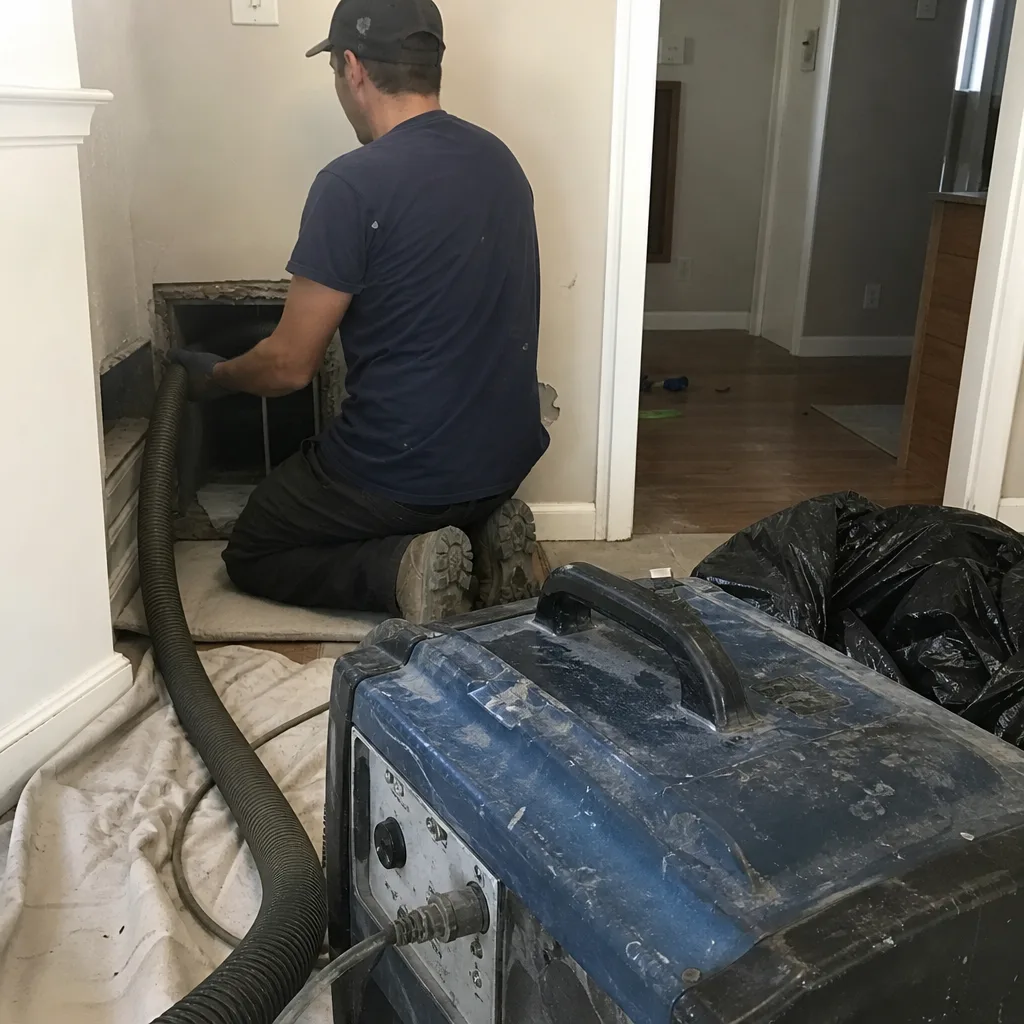 Before
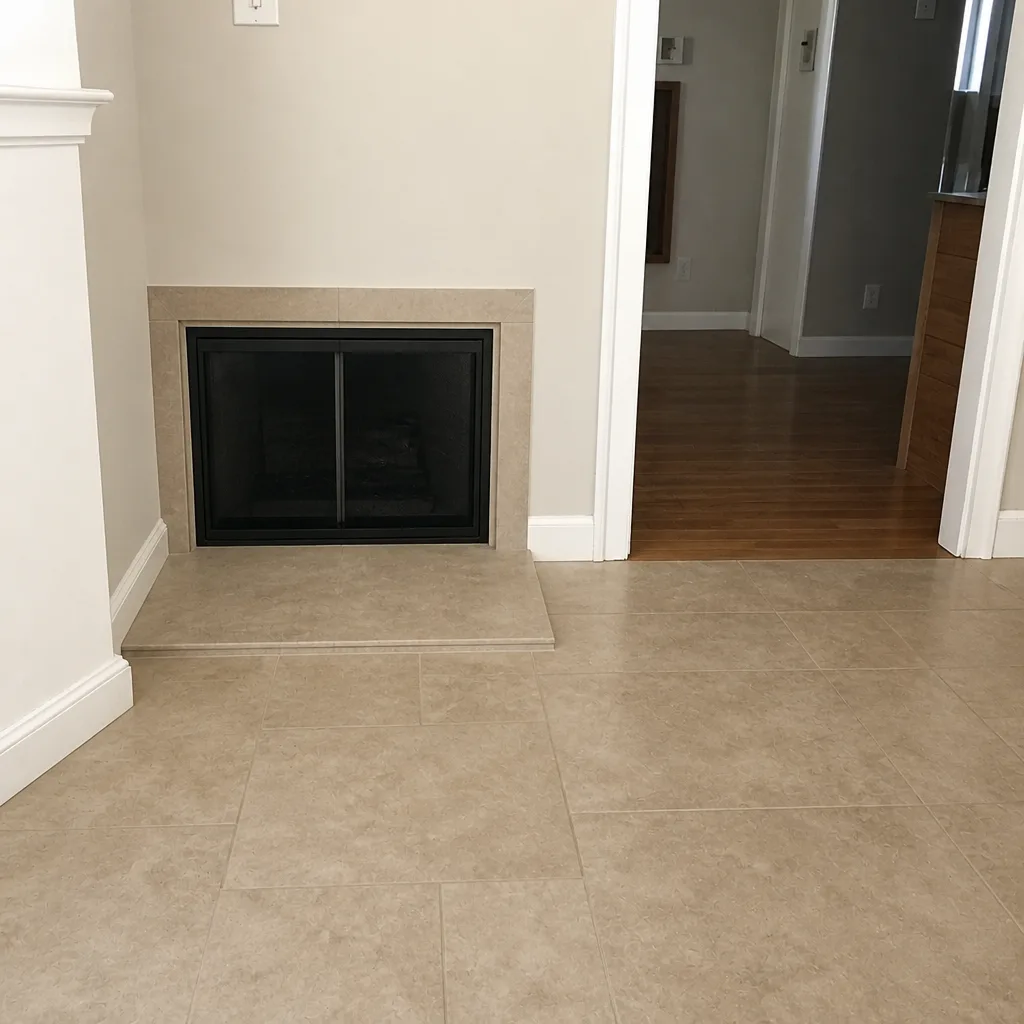 After
When to Call a Professional
Call a professional when any of the four conditions above apply – visible contamination in the return plenum or on the blower, a recent renovation, mold or musty odor, or a new HVAC system – because DIY can’t address those. Call if you’re noticing allergy symptoms that seem to worsen when the system runs, if your registers are noticeably dusty even after you clean them, or if your dryer takes much longer to dry a load or feels hot at the back. Call if your home is a rental property and you’re managing a schedule of cleanings, because the documentation matters. And call if you just want an honest assessment of the system before deciding: the estimate is free, and it’s the fastest way to know exactly what your system needs. Marysville Air Duct Cleaning Co offers free estimates in Marysville. Call (888) 847-8751. We answer 24/7. Fast dispatch from 7am to 7pm, Sunday through Friday. We also want to flag: if you want a copy of the plan for our Marysville Air Duct Cleaning Co approach, ask for it when you call, and we’ll walk you through the sections we clean and the equipment we use.
Frequently Asked Questions
You can clean the parts of the system you can reach – the register grilles, the return grilles, and roughly the first 18 inches of each branch duct. That’s genuinely useful maintenance, and it reduces the frequency of professional cleanings if you keep it up. What you can’t reach is the trunk lines, return plenum, and air handler, which are where the majority of contamination sits. So the honest answer is: you can clean the accessible portion yourself, and you can’t clean the rest without professional equipment.
A shop vac moves air through a filter, but it doesn’t pull the entire duct system into negative pressure, so dust dislodged by the vacuum wand can escape into the room. Professional HEPA-rated negative-air equipment draws the system into negative pressure with a HEPA-rated filter, so dislodged debris is captured at the source rather than redistributed into the house. That’s the containment difference, and it matters most when there’s construction dust, mold, or heavy allergen load in the system.
Most Marysville homes benefit from a professional cleaning every two to three years, though the interval depends on whether you have pets, allergy sufferers in the house, or a system that runs most of the year. Homes that recently had a renovation, a new HVAC installation, or a moisture event may need it sooner. Keeping up with DIY register and grille cleaning between professional cleanings stretches the interval and keeps the results longer.
Register and grille cleaning is safe for most homeowners. What’s not safe is opening air handler panels to reach the blower compartment or evaporator coil, because those sections contain electrical components and, in a gas furnace, combustion components. Reaching into a live air handler with a vacuum or brush is a real shock and gas hazard. If access to those components is part of the job, it’s a trained-professional task, and we’d rather talk you through it than have you attempt it.
Because they’re usually cleaning less. A quote that only covers register-level cleaning costs far less than one that cleans the trunk lines, return plenum, and air handler with negative-pressure containment. Ask specifically what the low quote includes, what equipment is used, and whether before-and-after photos are provided. If the answer is vague on any of those points, the price is an incomplete comparison. For a whole-system estimate, call (888) 847-8751 – estimates are free.
It removes some of it – the material sitting on the grilles and the first foot of each branch does get recirculated into the room whenever the system runs, and cleaning it out reduces that. What it doesn’t do is reduce the deeper contamination that lives in the trunk lines and return plenum, which is where the longest-lasting source of airborne particulate sits. So the answer is yes, partially, at the accessible layer, and no at the layer that matters most for indoor air quality over time.
You can vacuum out the section of vent that runs from the back of the dryer to the wall, and that’s worth doing periodically. What you can’t reach safely is the length of the vent behind the wall, and that’s where lint accumulates fastest and where the fire risk concentrates. A clogged dryer vent is a documented fire risk, not just a performance issue, so a professional cleaning is worth it – and the process also confirms the vent is properly connected and venting to the exterior.
Cleaning removes accumulated dust, lint, and biological material that recirculates into the living space when the system runs, and that can reduce the particulate load in the air. It doesn’t replace filtration, humidity control, or allergy treatment. If allergy symptoms are the reason you’re looking into cleaning, do the cleaning, and also look at whether your filtration and humidity setup is doing enough – a Honeywell or Aprilaire filtration or humidification system can address what a duct cleaning alone won’t. If you’re not sure which applies to your system, an air duct cleaning assessment is the place to start.
The Bottom Line
DIY duct cleaning and professional duct cleaning aren’t versions of the same activity – they address different parts of the system, and in Marysville’s climate and housing stock the difference matters. DIY does register and grille cleaning, which is real maintenance: it’s worth doing, and it stretches the interval between professional cleanings. Professional cleaning reaches the trunk lines, return plenum, and air handler with contact-brush agitation and HEPA-rated negative-pressure containment, which is where the contamination that affects indoor air quality actually lives. If visible contamination, a recent renovation, moisture or mold, or a new HVAC system are in play, DIY is not sufficient regardless of effort, and it’s time to call. If you’re not sure which side of the line your home falls on, a free estimate is the fastest way to know. Call (888) 847-8751. We answer 24/7. Fast dispatch from 7am to 7pm, Sunday through Friday. While we’re on the phone, ask about scheduling HVAC cleaning for the same visit, and about dryer vent cleaning if your dryer runs long – both are part of keeping the whole system healthy.
Written by the team at Marysville Air Duct Cleaning Co.