
Last updated November 25, 2026
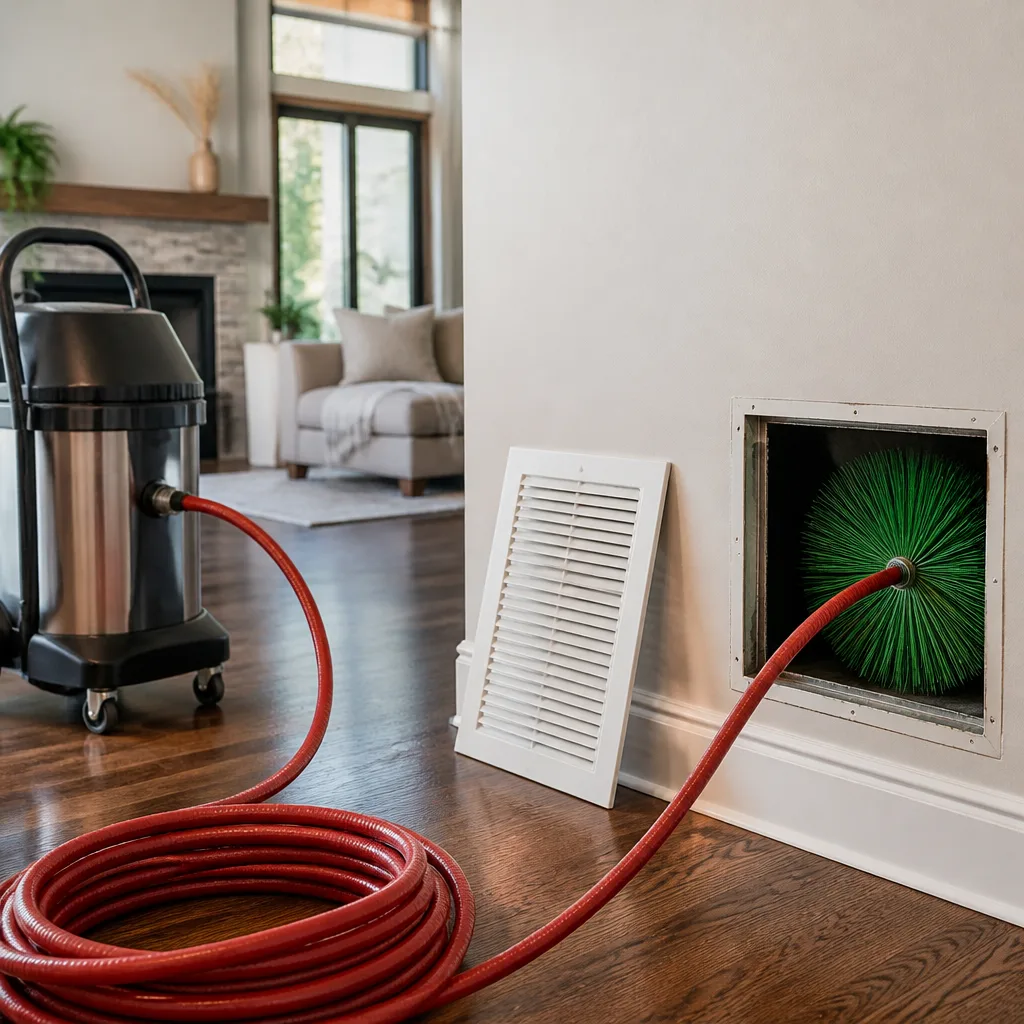 Whole-home duct cleaning
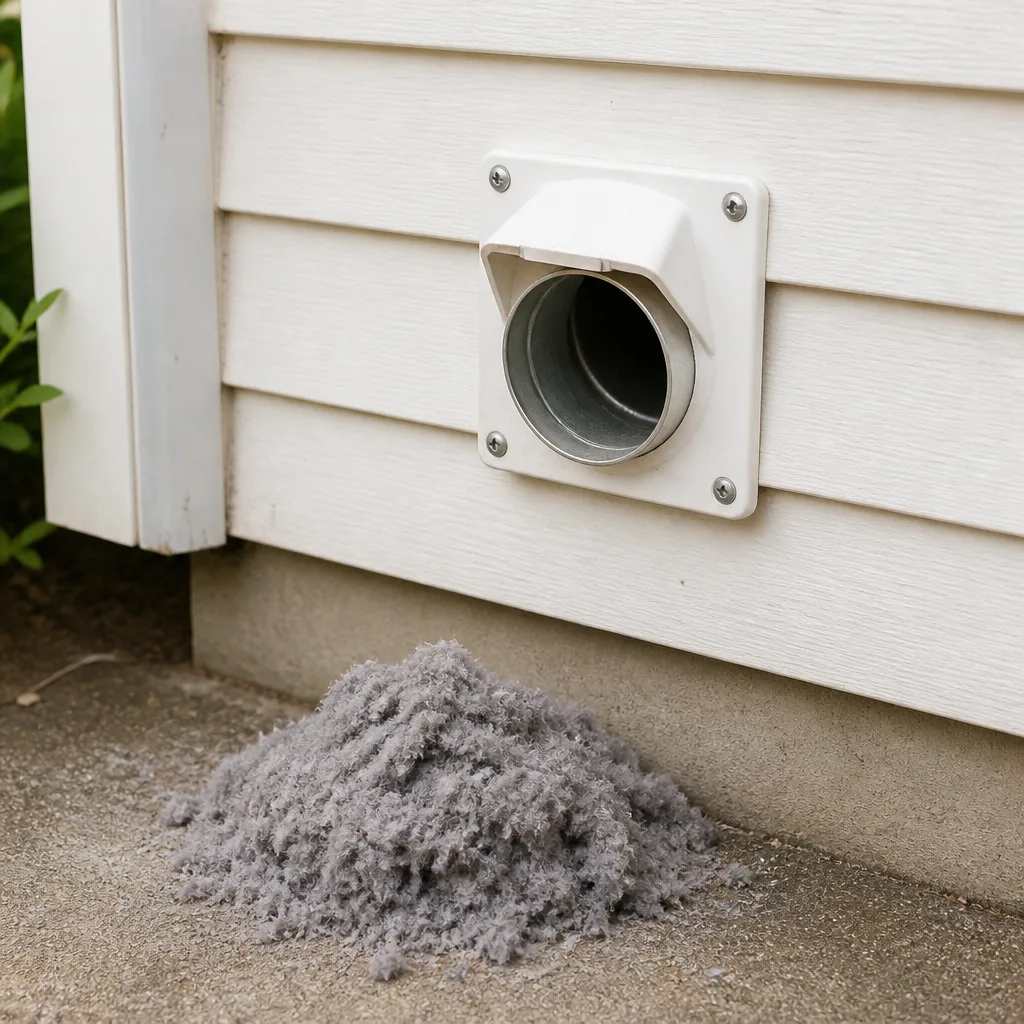 Dryer vent cleaning
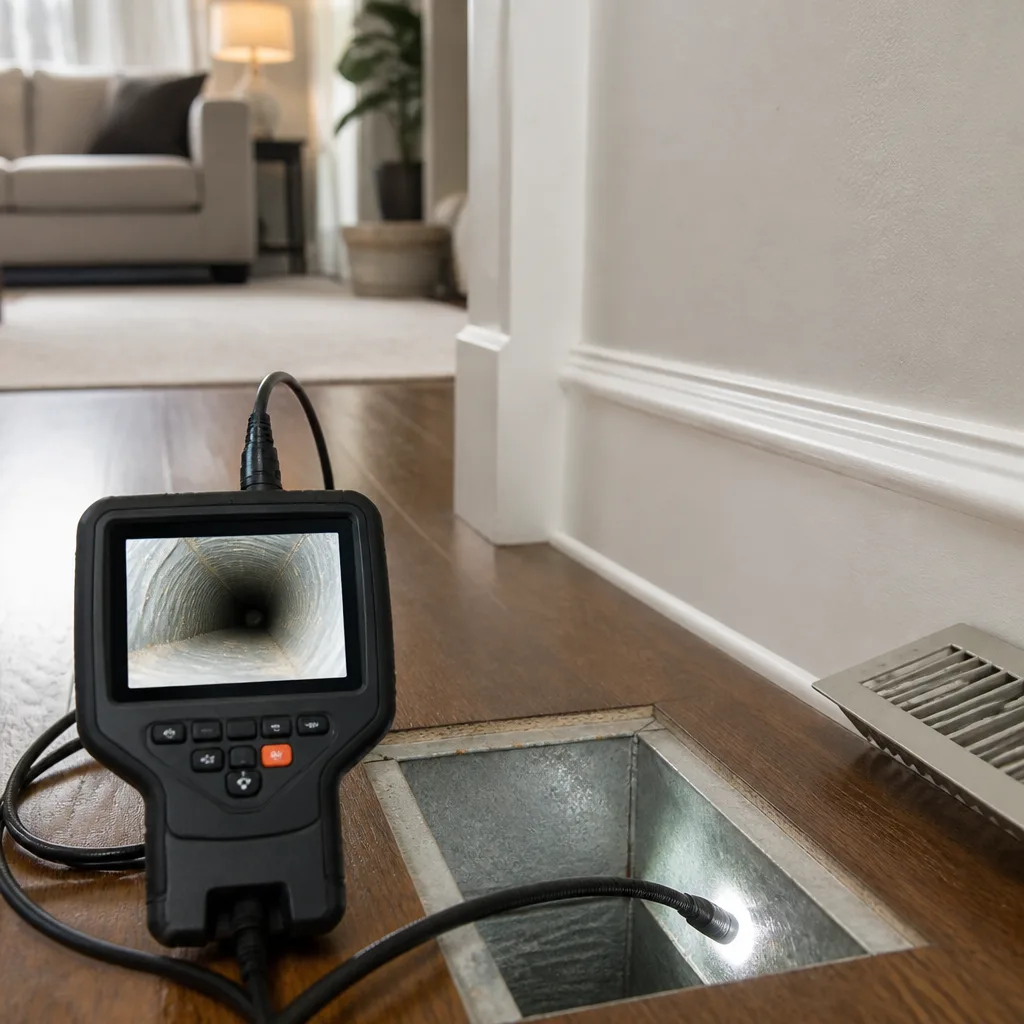 Camera inspection
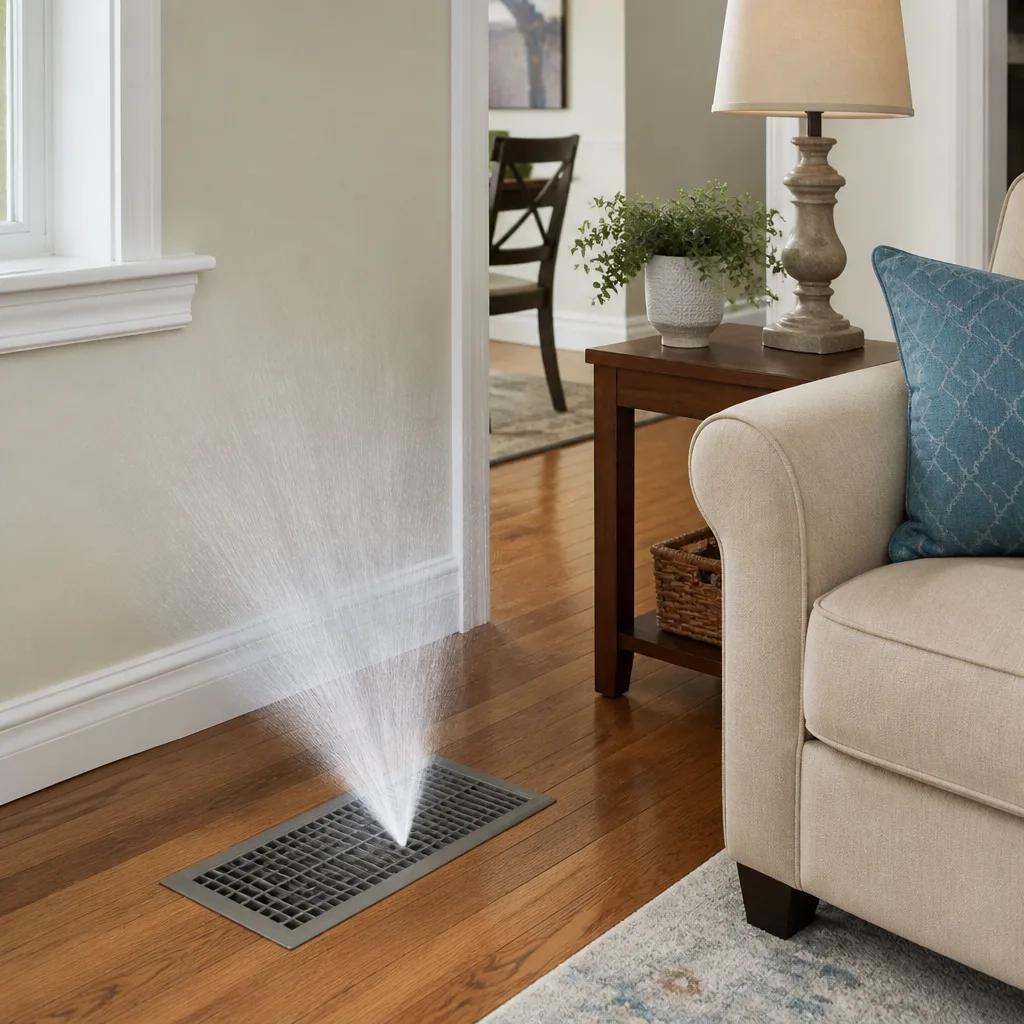 Sanitizing & deodorizing
Whole-system duct and dryer vent check with before-and-after photos - you see exactly what came out of your vents
That "$99 whole-house special" is a bait ad - the real number appears once they are in your hallway, or the "clean" is a shop-vac at the register. We photograph the inside of your ducts before and after instead.
Air Duct Cleaning Emergency Preparedness Guide for Marysville Homes
Most Marysville homeowners have a plan for the earthquake, the flood, the power outage. Almost none have a plan for what happens to the air inside the house afterward. Here’s the part that catches people off guard: a duct system that runs during a smoke event or a house fire pulls soot and combustion byproducts into every branch of the network within minutes, then holds them there long after the smell fades from the kitchen. The ducts become the storage tank for the event. This guide covers how the duct system fits into post-emergency recovery in Marysville, how to shut it down fast, what a proper inspection should document for your insurer, and what to know about your HVAC before anything goes wrong.
Quick Answer
After a fire, wildfire smoke event, or water intrusion in a Marysville home, shut the HVAC system off immediately and keep it off until the ductwork has been professionally assessed. If the system ran during or after the event, the ducts likely hold soot, smoke residue, or moisture, and restarting the system before cleaning spreads that contamination through every room. Professional contact cleaning with HEPA-rated containment is the standard recovery step, and documentation from that cleaning is what supports an insurance claim.
Styles & brands we work with
- Whole-home duct cleaning
- Dryer vent cleaning
- Camera inspection
- Sanitizing & deodorizing
Table of Contents
- The Three Emergency Scenarios That Require Duct Assessment
- How to Shut Down Your HVAC During a Smoke Event
- What Moisture Does Inside Ducts: The Timeline
- Post-Fire Duct Recovery: What the Process Involves
- What a Post-Emergency Inspection Should Document for Insurance
- Pre-Emergency Checklist: Know Your System Before You Need It
- Why Equipment Choice Decides the Outcome
- Duct Repair and Sealing After the Event
The Three Emergency Scenarios That Require Duct Assessment
Not every household disruption touches the ductwork. Three do, and they come up in Marysville often enough that it’s worth knowing them cold. Each one leaves a different signature in the system, and each calls for a different recovery step.
Wildfire smoke infiltration. The Snohomish County lowlands sit in a basin that holds smoke when regional fires push it west, and the summer smoke events of recent years have made that familiar. Smoke particles are small enough to pass through standard filters and settle on duct walls and interior insulation. A house that ran its air conditioning through a heavy smoke week, with windows closed, pulled that particulate into the system for days. The smell may clear from living spaces within a week while the residue remains in the ducts, and it returns the first time you switch from cooling to heating.
Water intrusion events. Burst supply lines, failed water heaters, appliance leaks, and storm-driven water entering a crawl space or basement all put moisture near duct runs. Ductwork routed through crawl spaces, which is common in Marysville’s older housing stock, is especially exposed. Wet fiberglass duct liner and pooled water inside low runs create the conditions for biological growth within days.
Post-fire remediation. Even a contained kitchen fire sends combustion byproducts into the return air path the moment the HVAC runs. Soot is oily and acidic. It adheres to duct surfaces, and it keeps damaging metal ductwork for as long as it sits. Fire restoration contractors handle structure and contents; the duct system is a separate scope that gets skipped more often than it should.
One more scenario worth flagging: major renovation. Tearing out a wall or refinishing floors fills the return ducts with drywall dust and sawdust, which behaves much like post-fire particulate in how it settles. It’s not an emergency, but it’s the same recovery work.
How to Shut Down Your HVAC During a Smoke Event
The single most effective thing you can do during a smoke event is stop the system from circulating outdoor air inside the house. Here’s the sequence, in order.
- Turn the thermostat to OFF. Not to fan-only, not to a lower setpoint. Off. Fan-only mode keeps pulling air through the system and through the ducts, spreading what’s already inside.
- Close windows and exterior doors. Smoke that enters through a window gets pulled into the return, so keep the envelope shut for the duration.
- Close the fresh-air intake if you have one. Some newer systems in Marysville homes have a dedicated outdoor air intake for ventilation. Tape it or close its damper if you can access it easily. Don’t dismantle anything.
- Change the filter once the event ends. A filter loaded with smoke particulate does nothing useful and restricts airflow. A fresh filter protects the equipment for the recovery process.
- Keep the system off until the ducts are assessed. This is the step people skip. Restarting a system whose ducts are coated in smoke residue loops that residue back into the living space and into the blower and evaporator coil, where it becomes much harder to remove.
In our experience, this is where homeowners in Marysville lose the most ground: they ride out the smoke week with the system off, then flip it back on the first cool morning without thinking about what’s sitting inside the ducts. If the system ran during the event at all, the assessment comes before the restart. The smell that returns is your clue. A short filter change and a cleaning is far less involved than addressing a system that has been running with contaminated ductwork for a season. If you’re unsure whether your ducts were exposed, call us at (888) 847-8751.
One safety caveat: do not open panels, remove duct sections, or reach into the air handler yourself to inspect for smoke residue. The blower, the electrical connections, and any gas-fired heat exchanger are not homeowner territory. Leave the system sealed and let a trained professional open it.
What Moisture Does Inside Ducts: The Timeline
Water in a duct system is a countdown. The clock matters because the recovery cost and scope grow quickly, and the health implications of a colonized duct system are harder to resolve than one that’s caught early. Here’s how the timeline runs.
- 0 to 24 hours: Standing water or saturated insulation. No visible growth yet, but the material is holding moisture and the interior of the duct is at high relative humidity. This is the highest-value window: extract water, dry the system, and the ducts are recoverable.
- 24 to 48 hours: Condensation forms on cold metal duct surfaces and on any cool crawl space run. The interior environment supports spore germination starting in this window on porous surfaces. This is still an easy recovery if drying starts now.
- 48 to 72 hours: Visible growth becomes likely on fiberglass liner, dust deposits, and any organic material in the ducts. Odor develops. By this point, drying alone is not the answer; the system needs cleaning and sanitizing, plus assessment of liner that may have to be replaced.
- One week and beyond: Colonized duct liner, persistent musty odor, and a duct system that is actively distributing spores into every room it serves. Recovery now means removing contaminated material, deep cleaning, sanitizing the system, and repairing or replacing compromised sections.
What we look for in a Marysville moisture recovery: the duct runs in crawl spaces and low basements are the ones that stay wet longest. If your system’s runs travel through a crawl space that flooded, assume they were exposed and get them inspected, even if the ducts themselves look dry from the access panel. Interior liner holds water in a way the outer metal jacket doesn’t show. The drywall in the room above may read dry on a moisture meter while the duct liner a few feet away is still soaked.
For a full picture of what standard cleaning covers, our air duct cleaning page walks through the residential process in detail, which is the same groundwork any post-emergency recovery builds on.
Post-Fire Duct Recovery: What the Process Involves
The recovery work after a fire is not a heavier version of routine cleaning. It’s a different scope, and it starts with containment. Here’s what a proper post-fire duct recovery involves in a Marysville home.
The first step is assessment, before any cleaning. Soot has a distinct chemical signature, and how far it traveled into the system tells the restoration crew what has to be cleaned versus what has to be removed and replaced. Duct sections close to the return plenum take the heaviest load. Sections further out may be lightly affected. The assessment maps that spread, and it also documents the starting condition for your insurance claim.
Next comes cleaning with contact methods under containment. This is where the equipment choice is everything. A traditional blow-through “duct cleaning” on a post-fire system is worse than doing nothing: it dislodges soot into the air and spreads it through the very living spaces the restoration is trying to clear. The professional approach is the reverse. Contact-brush systems agitate and remove soot from duct walls, and HEPA-rated negative-air equipment holds the duct interior under negative pressure the whole time, capturing dislodged material at the source. No cross-contamination, no cloud of fine soot settling on freshly cleaned surfaces.
Sanitizing comes after mechanical cleaning. Residual odor after a fire comes from acids and combustion byproducts in the porous surfaces, and the duct interiors are the last place to hold it. Sanitizing the system reduces both the odor source and the conditions that would let any biological growth establish on a surface softened by an acidic residue.
Our team uses Marysville Air Duct Cleaning Co-level equipment on every job: Rotobrush contact-brush systems for the mechanical cleaning, Nikro HEPA-rated negative-air units for containment, and Abatement Technologies air-purification equipment when contamination is elevated, which post-fire work always is. That platform is what makes a documented result possible.
What a Post-Emergency Inspection Should Document for Insurance
Insurance adjusters are trained on documentation, and most homeowners don’t know what’s usable and what gets rejected. Whether your claim gets approved for duct recovery comes down to the paperwork. Here’s what a proper post-emergency duct inspection should capture.
A usable inspection report covers, at minimum:
- Pre-work photographs of every accessible duct interior. Not just the first run. Every branch. Each photo needs the contamination source identifiable, the location identifiable, and ideally a frozen timestamp in-frame. A photo with no context is far weaker than one showing duct contamination alongside the duct run, the access point, or a recognizable detail of your system.
- Moisture meter readings from duct liner and any nearby building materials. Readings with the instrument visible in the photo are more credible than a written value alone.
- Written assessment of affected sections. A plain description of what the system looked like before cleaning, how far contamination spread, and what was removed versus cleaned. Insurers respond well to specific, sequenced documentation.
- Post-work photographs of the same duct sections. The before-and-after pairing is what makes the claim airtight. Without the post-work shot, the pre-work photo proves nothing was done except documented.
- Equipment list and method description. Which containment and cleaning equipment was used, and how the duct interior was held under negative pressure. Adjusters routinely approve claims on the strength of the method description alone when the pictures match.
- Sanitizing product and scope notes. If sanitizer was applied, the fact that it was applied to the surfaces it was intended for, and the surfaces it was not.
A few small things help: get the report in writing, get it within a few days of the inspection, and get a copy of the pre-work photos before the cleaning crew leaves. Photos are much harder to produce after the work is done. We provide before-and-after photo documentation of your own ducts as part of the recovery, and we’re happy to coordinate the report format with your adjuster.
Pre-Emergency Checklist: Know Your System Before You Need It
Preparation is not a binder of documents. It’s knowing five or six concrete facts about the system in your house so that when something does happen, the response is immediate and accurate. Use this checklist the next time you walk through your house.
- Find your air handler and furnace. Locate the unit, note where the power switch is, and label it. In an emergency, you don’t want to be hunting for the disconnect.
- Find the return air grilles. Walk the house and count them. One central return or several small ones? This determines how the recovery process will be scoped.
- Find the filter slot and know its size. Write the size inside the return air grille door or on a sticker in the mechanical closet. A loaded filter is the first thing to change after a smoke event, and knowing the size saves you a trip.
- Know whether your ducts run through a crawl space or an attic. In Marysville, crawl space runs are common. Systems with ducts in a low crawl space are far more exposed to moisture events, and knowing this ahead of time tells you which recovery scenarios apply to your home.
- Know whether you have a fresh-air intake. Some systems have one; most don’t. If you do, know where it is, so you can close it during a smoke event.
- Know your duct liner material. Rigid metal duct with external insulation behaves differently from internally-lined fiberglass. Internal liner holds moisture and soot far longer, which changes the recovery timeline.
- Photograph the system when it’s clean. A single photo of each accessible duct interior, taken on a normal day, is the strongest pre-emergency baseline your insurance claim can have. It documents what “normal” is in your house, which makes the “damage” case much clearer.
- Note the age of the system and the year of last cleaning. Doesn’t need a folder. A note in your phone is enough.
If you’d like a professional baseline walkthrough on a normal day, our HVAC cleaning service includes an assessment of the whole system, and it’s the best moment to get that pre-emergency documentation in place.
Why Equipment Choice Decides the Outcome
In an emergency recovery, the difference between a clean duct system and a problem deferred is the method. Two things matter: the duct walls have to be physically worked with contact cleaning, and everything dislodged has to be captured at the source with HEPA-rated containment. Anything else is air movement dressed up as cleaning.
A blower-only “cleaning” loosens dust and soot into the airstream and lets the HVAC fan distribute it. You get the smell back within a week, in our experience, and the contamination redistributes to the surfaces the system serves. Contact cleaning and HEPA containment are a different approach: the brush agitates and removes, the negative-air unit holds the duct interior at negative pressure, and nothing crosses into the living space. That’s the standard you should look for.
The equipment in use on a legitimate recovery matters in another way too. Elevated contamination scenarios, which is what post-fire and post-flood work is, need more than the equipment used for routine residential cleaning. Abatement Technologies air purification equipment is the system those scenarios call for. Rotobrush covers the contact-cleaning side. Nikro HEPA-rated negative-air units cover the containment side. When you’re evaluating a provider, ask what equipment will be on the job. If the answer is vague, the outcome will be too. For dryer vent cleaning, the same logic applies: the vent run has to be physically worked and the lint captured, or it stays where it was, and dryer vent lint is a documented fire risk.
Duct Repair and Sealing After the Event
An emergency recovery that stops at cleaning leaves one problem in place. Duct leaks, which existed before the event in most homes, are now the pathway back in. Sealing them makes the cleaned system stay clean longer, and it matters more after an emergency than before one.
Where leaks matter most after an emergency:
- Seams and joints in runs routed through a crawl space. Water that entered the crawl space found these first.
- Connections at the air handler and at the return plenum. These are the same points smoke and soot enter on the return side.
- Any disconnected or crushed run. A run that’s separated from its boot or kinked in a tight space moves air where it wasn’t meant to go, which draws crawl space air into the living space.
- Flexible duct in wall cavities. Disconnected flex duct inside a wall is a common post-renovation finding.
Sealing the system before the final cleaning gives you a clean result that holds. Done after, it protects the recovery. Either way, it’s part of the scope, and in a Marysville home it’s usually the last step before we sign off on the job.
Common Mistakes to Avoid
- Restarting the HVAC before assessing the ducts. Turning the system back on after a fire or smoke event pulls soot back into every room and into the blower, the coil, and the heat exchanger.
- Running the fans on “circulate” during smoke events in Marysville. The fan is the transport mechanism. Fan-only mode does not clean air, it distributes whatever the ducts hold.
- Treating flood moisture as solved when the visible water is gone. Drywall reads dry while internally-lined duct in the crawl space stays soaked. Assume exposure and get it inspected.
- Accepting a blower-only cleaning after an emergency. Blow-through cleaning stirs soot and smoke residue and redistributes it. Ask for contact cleaning and HEPA-rated containment by name before the work starts.
- Relying on photos taken after the cleaning. Without usable before-and-after pairs, insurers routinely reject duct line items. Photograph before anything is touched.
- Skipping the dryer vent. A smoke or fire event doesn’t create lint, but it does loosen it. The dryer vent run should be checked and cleaned alongside the ductwork, because lint in that line is a documented fire risk in its own right.
- Sealing or repairing ducts before they’re cleaned. Sealing over contamination traps it. The sequence is clean, sanitize, seal, and then a final verification.
See the difference
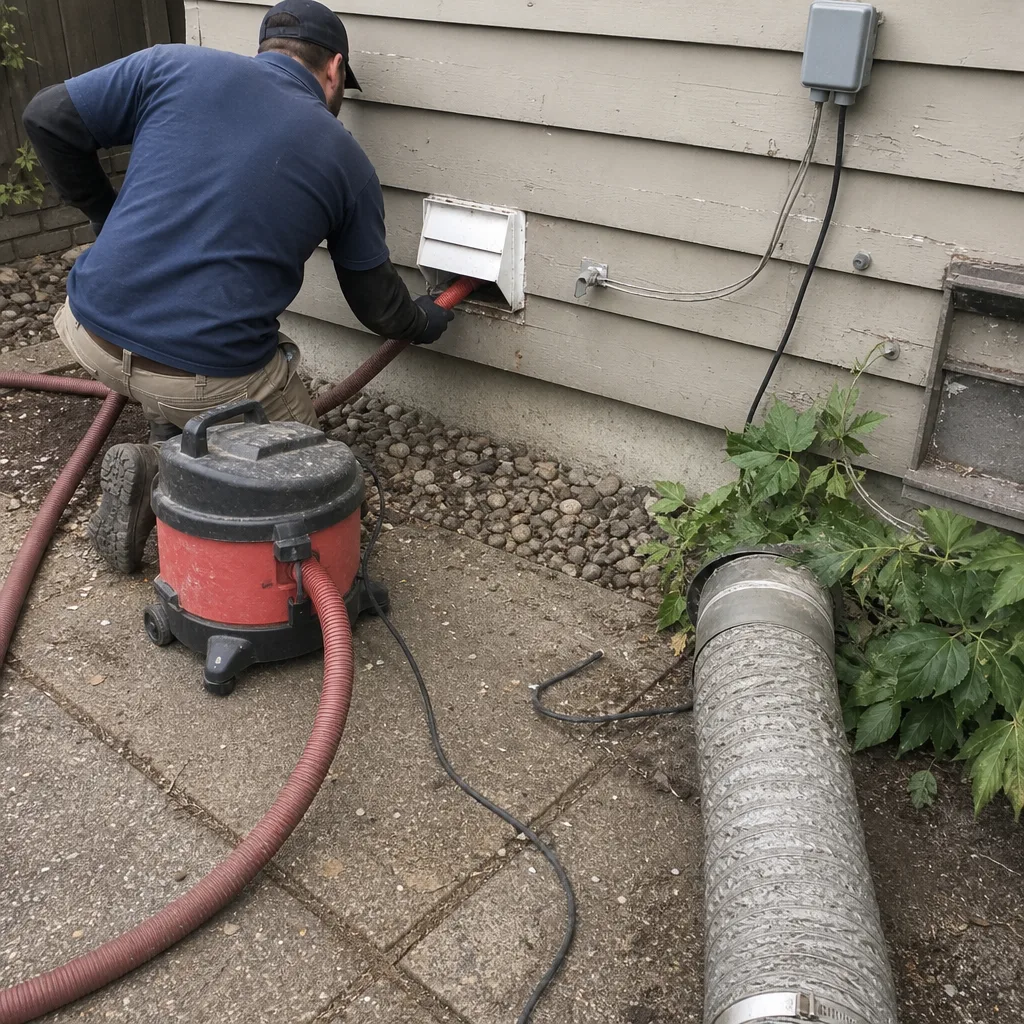 Before
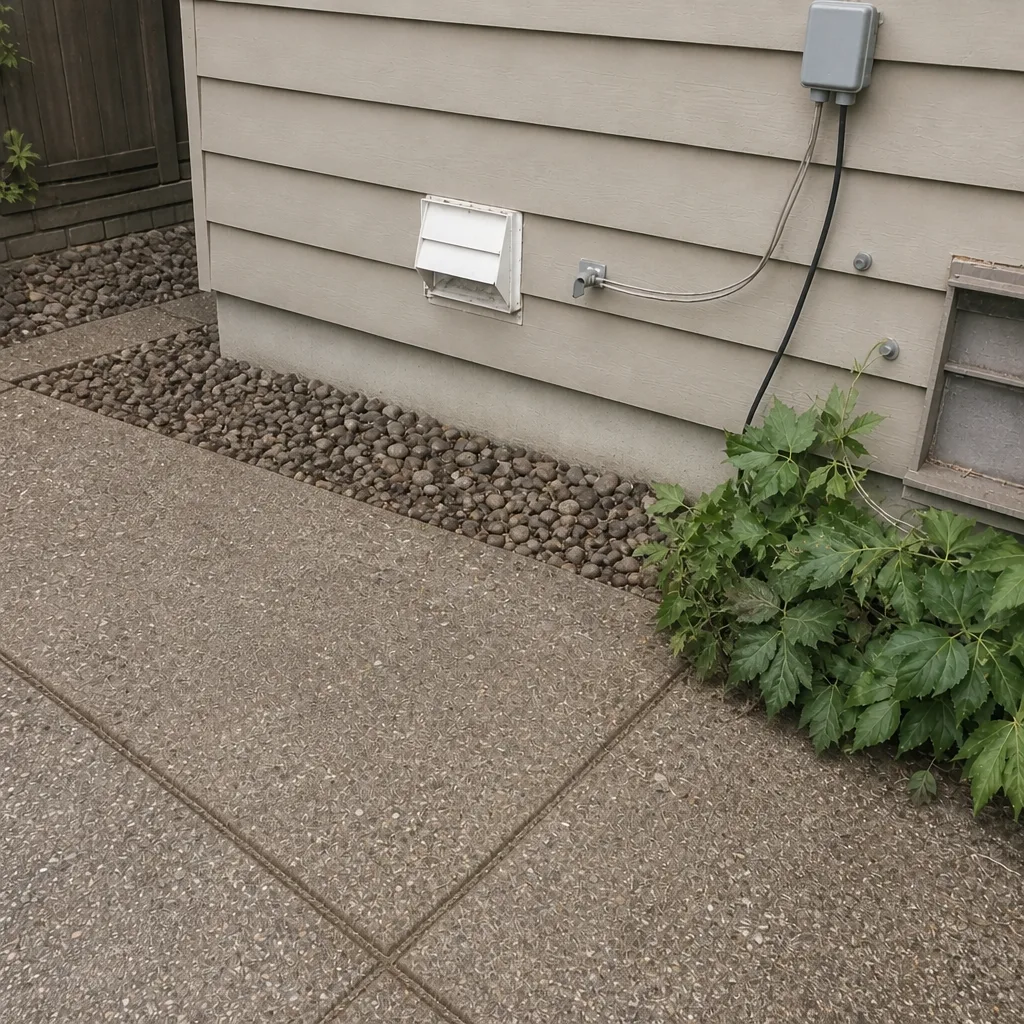 After
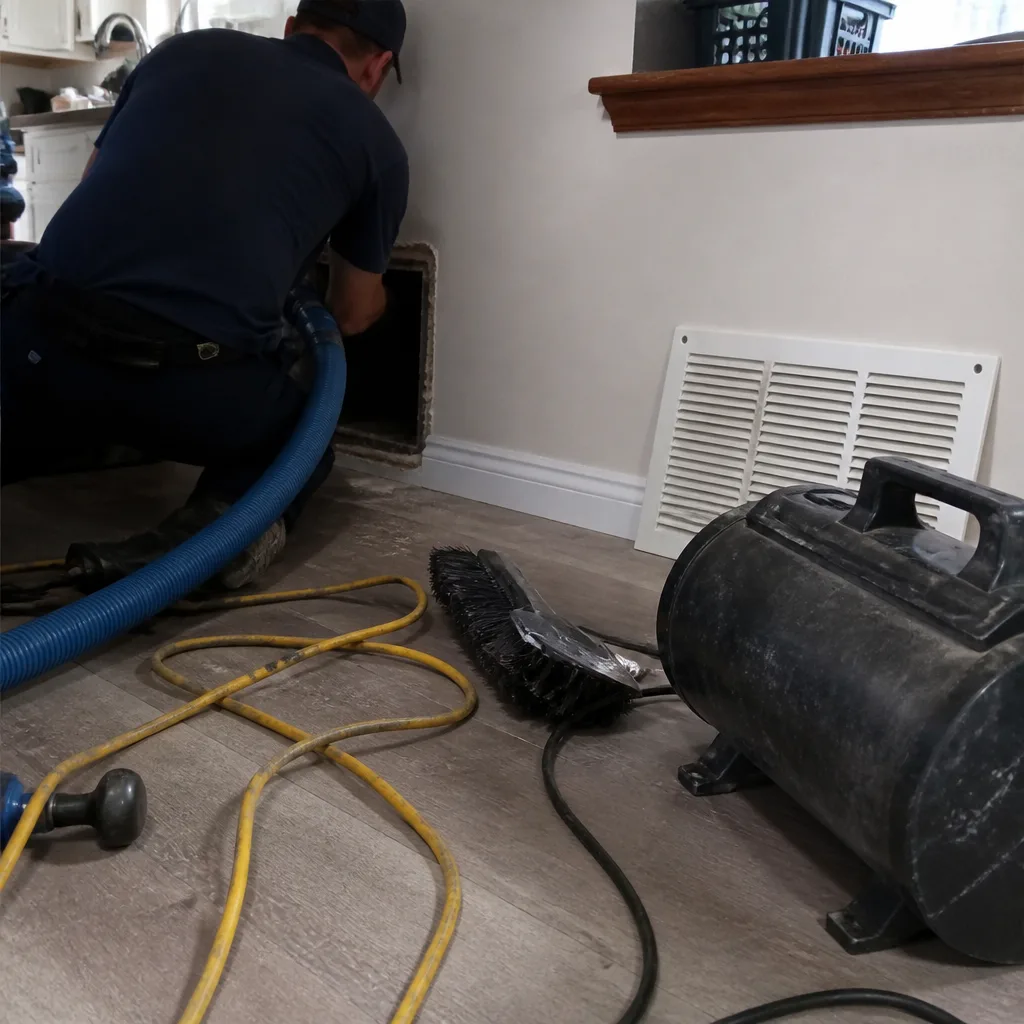 Before
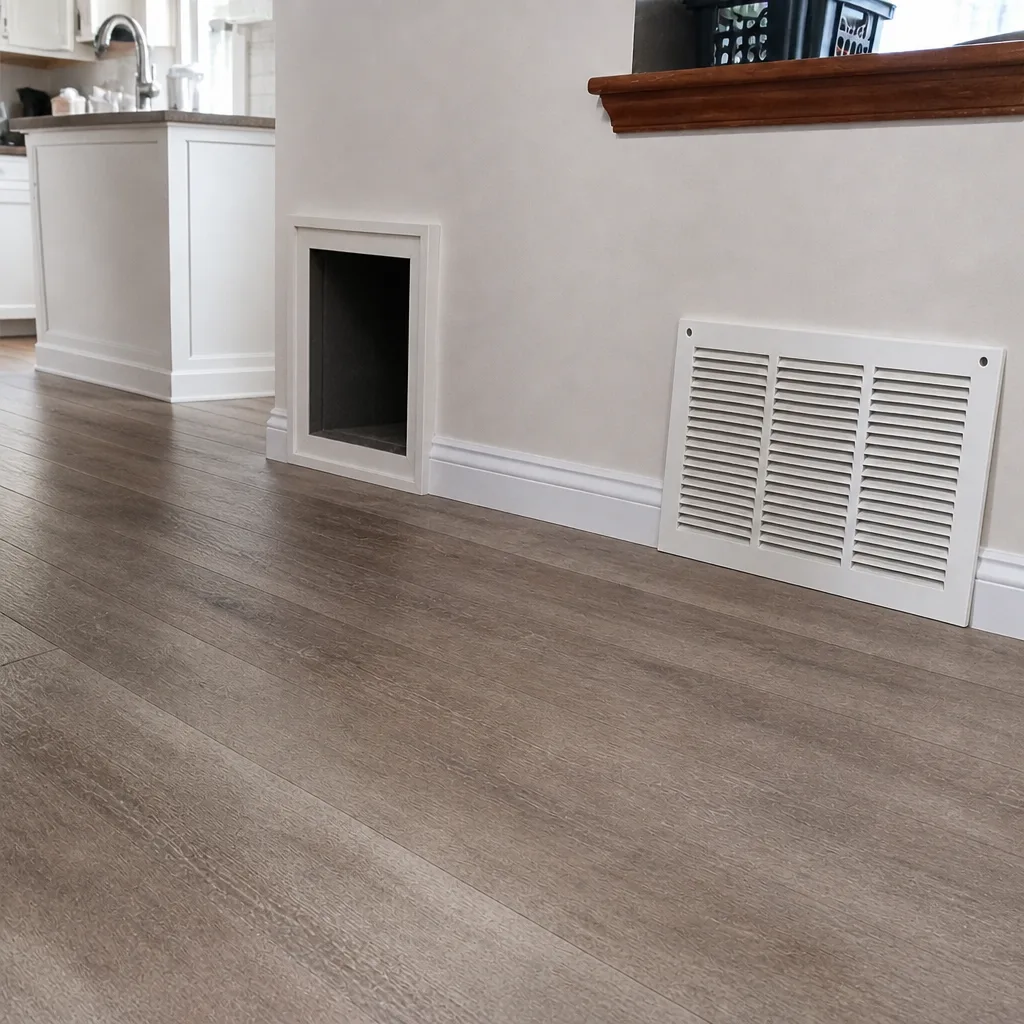 After
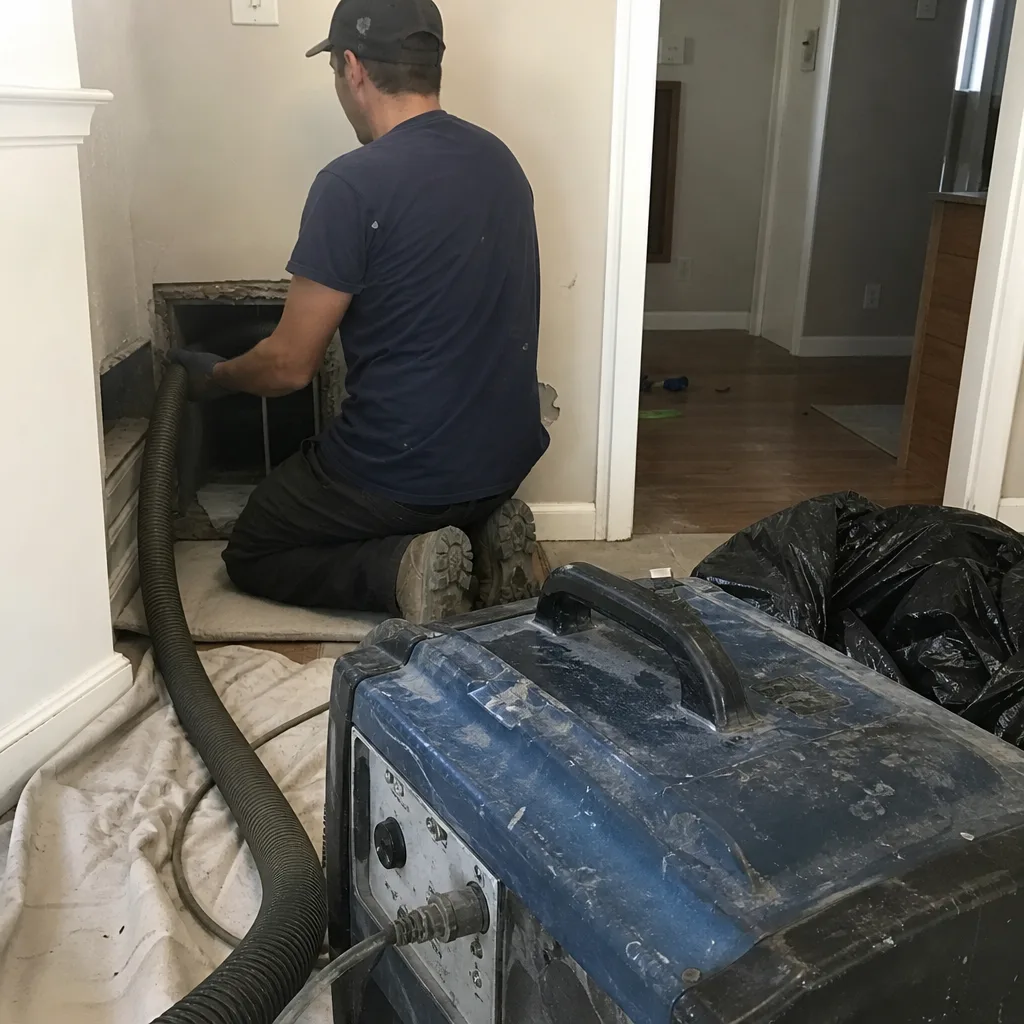 Before
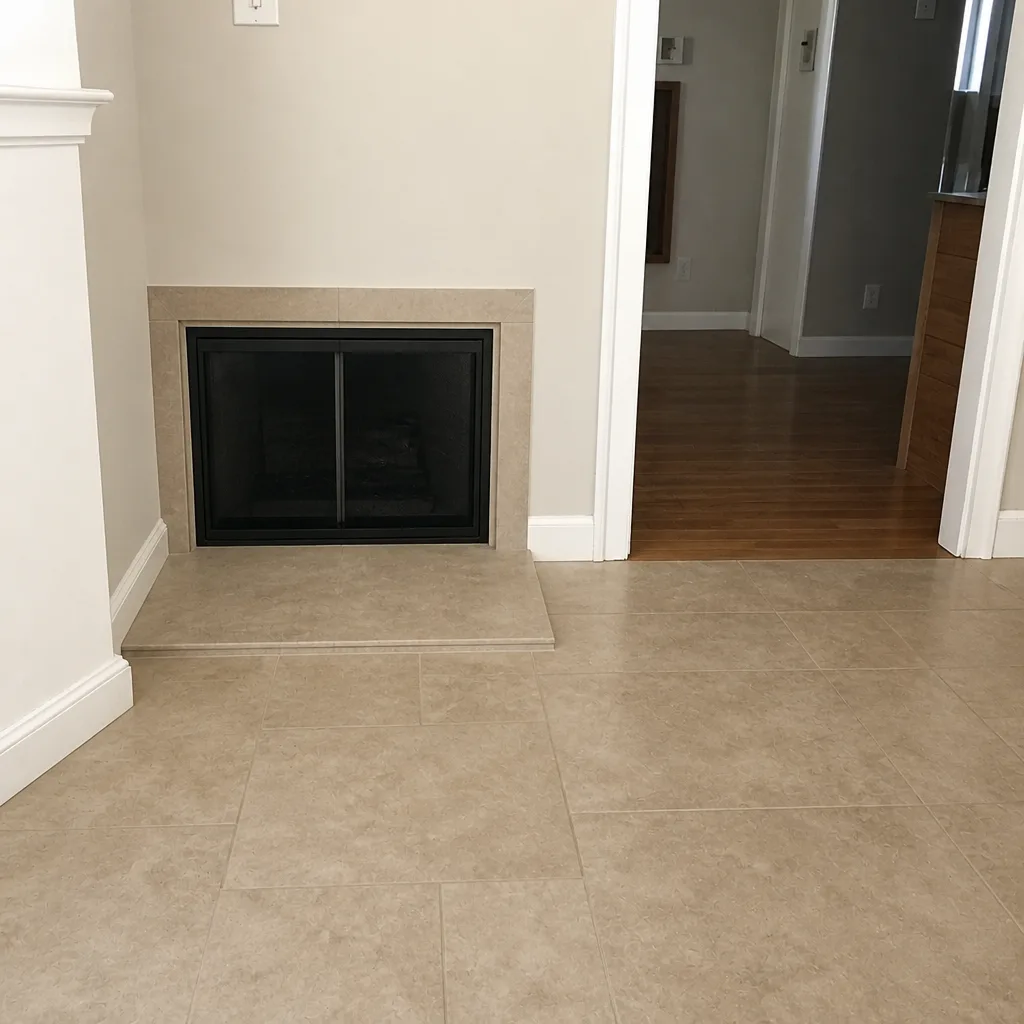 After
When to Call a Professional
Call for a professional duct assessment when any of the following is true of your Marysville home: the HVAC ran at any point during a house fire or wildfire smoke event; the ductwork runs through a crawl space or basement that took on water; the house recently came through a major renovation and you’re seeing visible dust in the registers; the furnace or AC has been making a musty smell when it starts; anyone in the house has asthma, allergies, or a compromised immune system and the home has had a recent emergency; or you’re filing an insurance claim and need before-and-after documentation of the duct system. Each of these is a whole-system assessment, not a filtered air handler change. Marysville Air Duct Cleaning Co offers free estimates in Marysville. Call (888) 847-8751. We answer 24/7. Fast dispatch from 7am to 7pm, Sunday through Friday.
Frequently Asked Questions
As soon as the structure is cleared as safe to enter and before the HVAC is turned back on. Soot residue keeps affecting metal ductwork and duct components for as long as it sits, so waiting a few weeks turns a cleaning into a repair-and-replacement scope. Keep the system off and get an assessment first. Call (888) 847-8751 for a free estimate.
If the HVAC ran during the smoke event, yes. Smoke particles pass through standard filters and settle on duct walls and liner, and the smell returns the first time the system is used. If the system was off for the entire event and the house was closed, a filter change and an assessment are usually enough. Call (888) 847-8751 to schedule a walkthrough so we can tell you which situation you’re in.
Conditions for growth start within 24 to 48 hours on wet porous surfaces, and visible growth is likely within 48 to 72 hours. Internally-lined fiberglass duct holds moisture longer than the outer metal shows, and crawl space runs in Marysville homes stay wet well after the room above reads dry. If your ducts were near water, treat the timeline as started. Call (888) 847-8751 for a moisture assessment.
Often yes, when the claim includes usable documentation: pre-work photos of the duct interiors, moisture readings, method description, and post-work photos of the same sections. Reimbursement depends on the policy, the cause of loss, and how clearly the duct scope is separated from the structure and contents line items. We provide before-and-after documentation of your own ducts and can format the report to your adjuster’s needs. Call (888) 847-8751 to talk through the scope.
Because the scope is smaller than what you actually need. A low quote usually covers a blower-only pass, which stirs soot and dust into the air and redistributes it. It doesn’t touch the duct walls, and it doesn’t contain the debris. A legitimate post-emergency recovery is contact cleaning plus HEPA-rated negative-air containment, and it’s priced on the size and condition of the system. For a straight answer about what the work takes, call (888) 847-8751. Estimates are free.
Ask to see before-and-after photos of your own ducts, not stock images. Ask what equipment will be on the job, and expect specific answers: contact-brush, HEPA-rated negative-air, and air purification where contamination is elevated. Ask what the inspection documented, and get a copy of the report with the photos. Any provider that can’t show those to a homeowner isn’t doing the work to the standard the recovery requires. Call (888) 847-8751 and we’ll walk you through exactly what we document.
The Bottom Line
The duct system is the hardest working hidden system in a Marysville home and the one most exposed after an emergency. Shut the HVAC off immediately during a smoke event. Get an assessment before you restart it. Treat water in the ducts as a timeline; the first 48 hours decide how much recovery costs. Document everything before cleaning starts, because insurers want before-and-after pairs of your own ducts. Know your system before the emergency so your response is fast. And when you’re choosing who does the recovery, insist on contact cleaning and HEPA-rated containment. Call Marysville Air Duct Cleaning Co at (888) 847-8751 for a free estimate. We answer 24/7. Fast dispatch from 7am to 7pm, Sunday through Friday. Our technicians have up to 10 years of experience.
Written by the team at Marysville Air Duct Cleaning Co.