
Last updated November 25, 2026
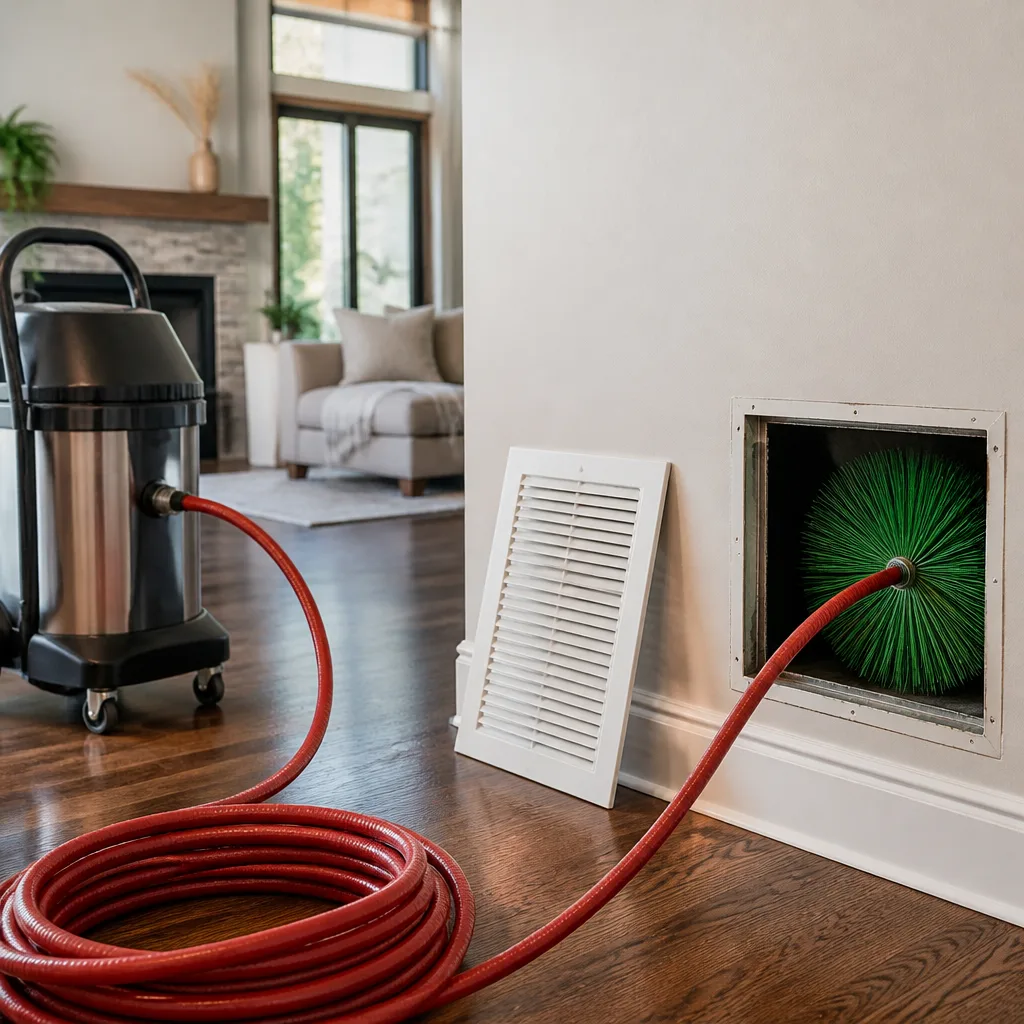 Whole-home duct cleaning
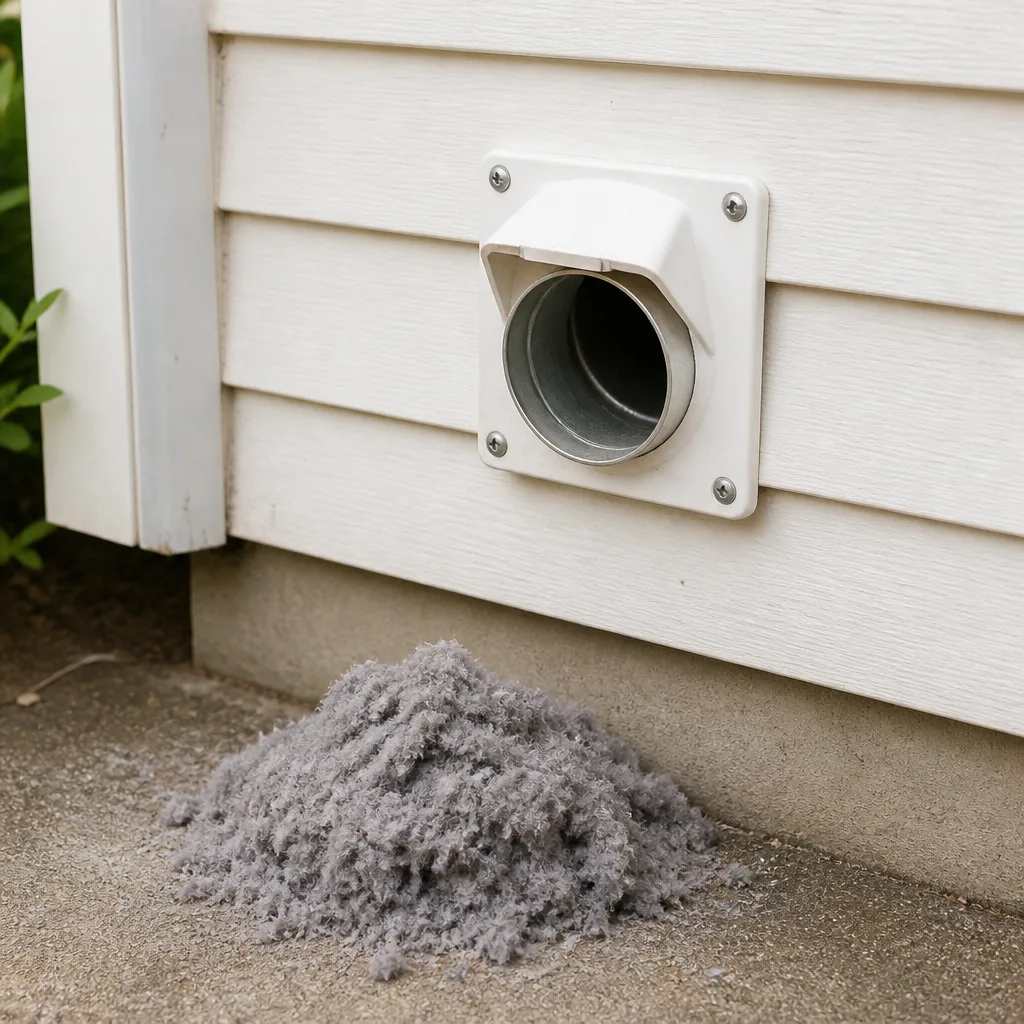 Dryer vent cleaning
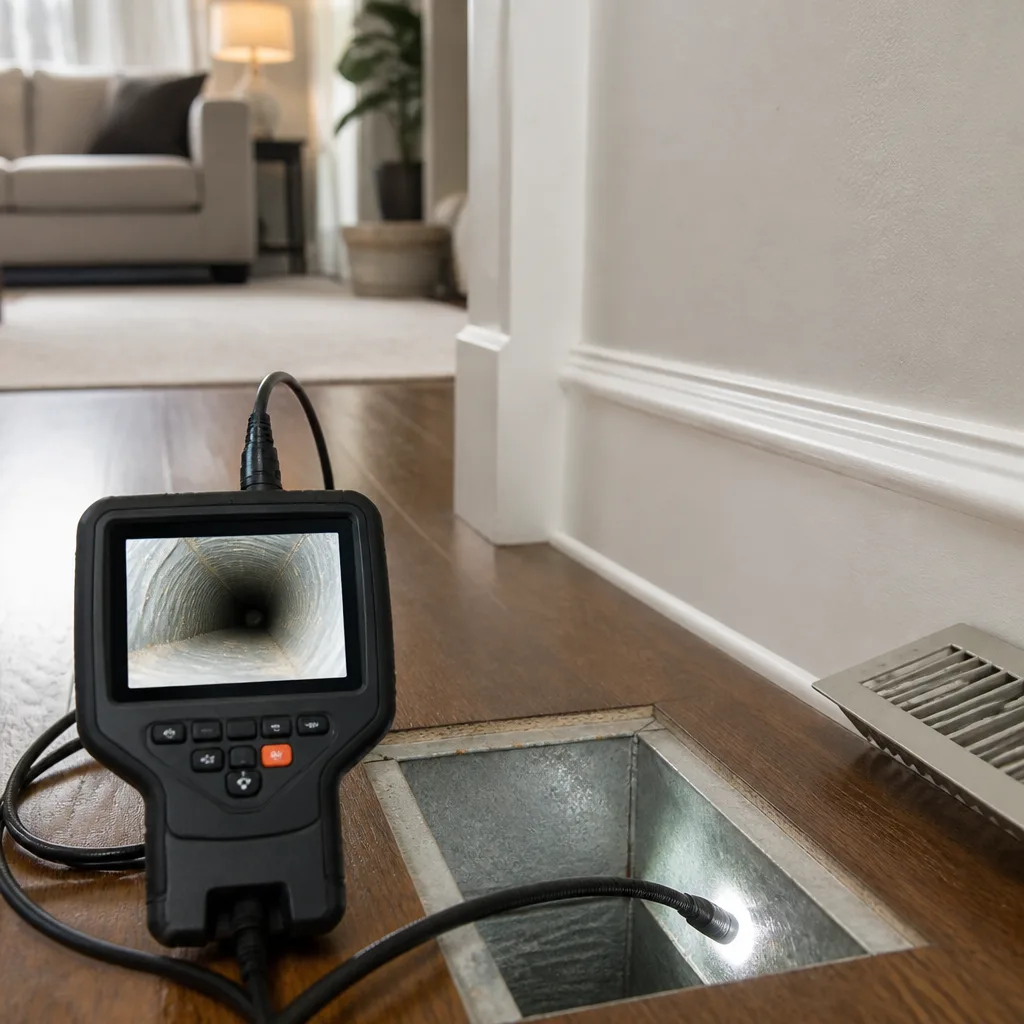 Camera inspection
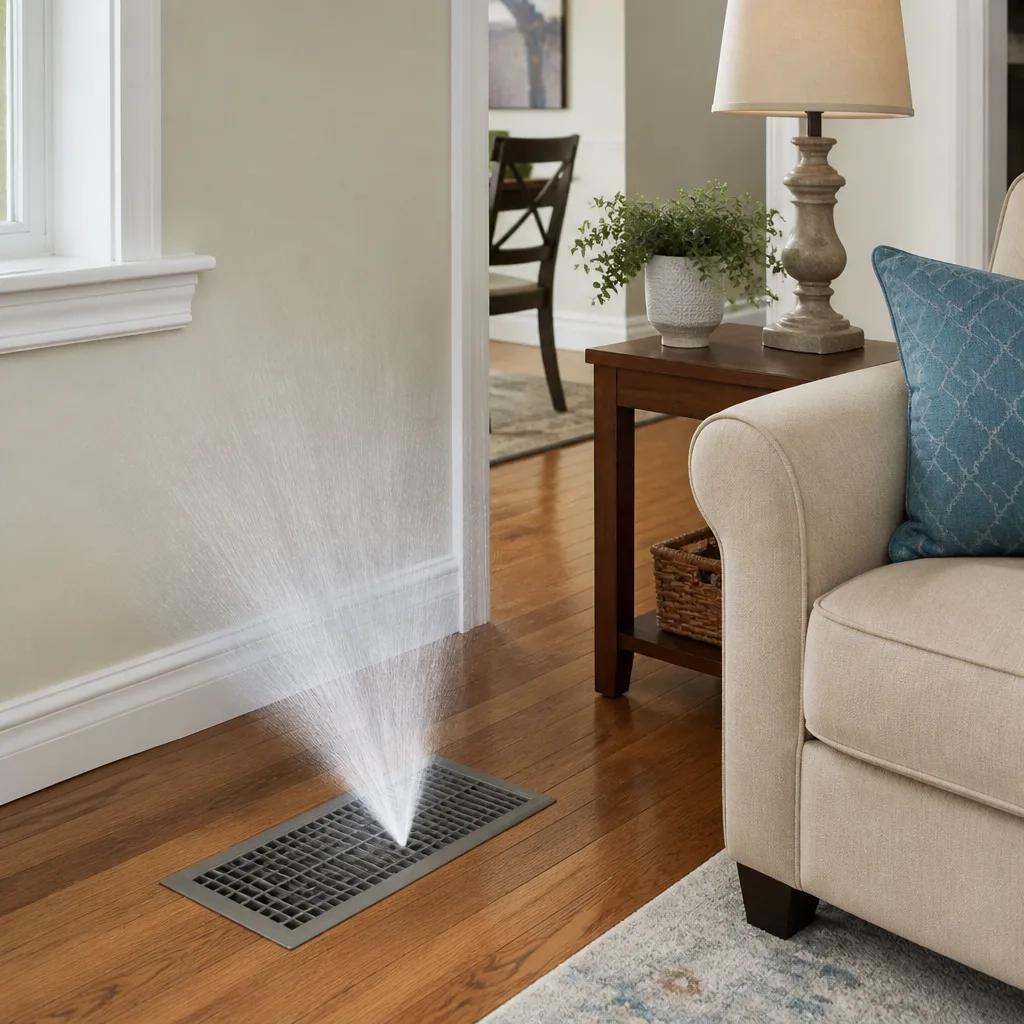 Sanitizing & deodorizing
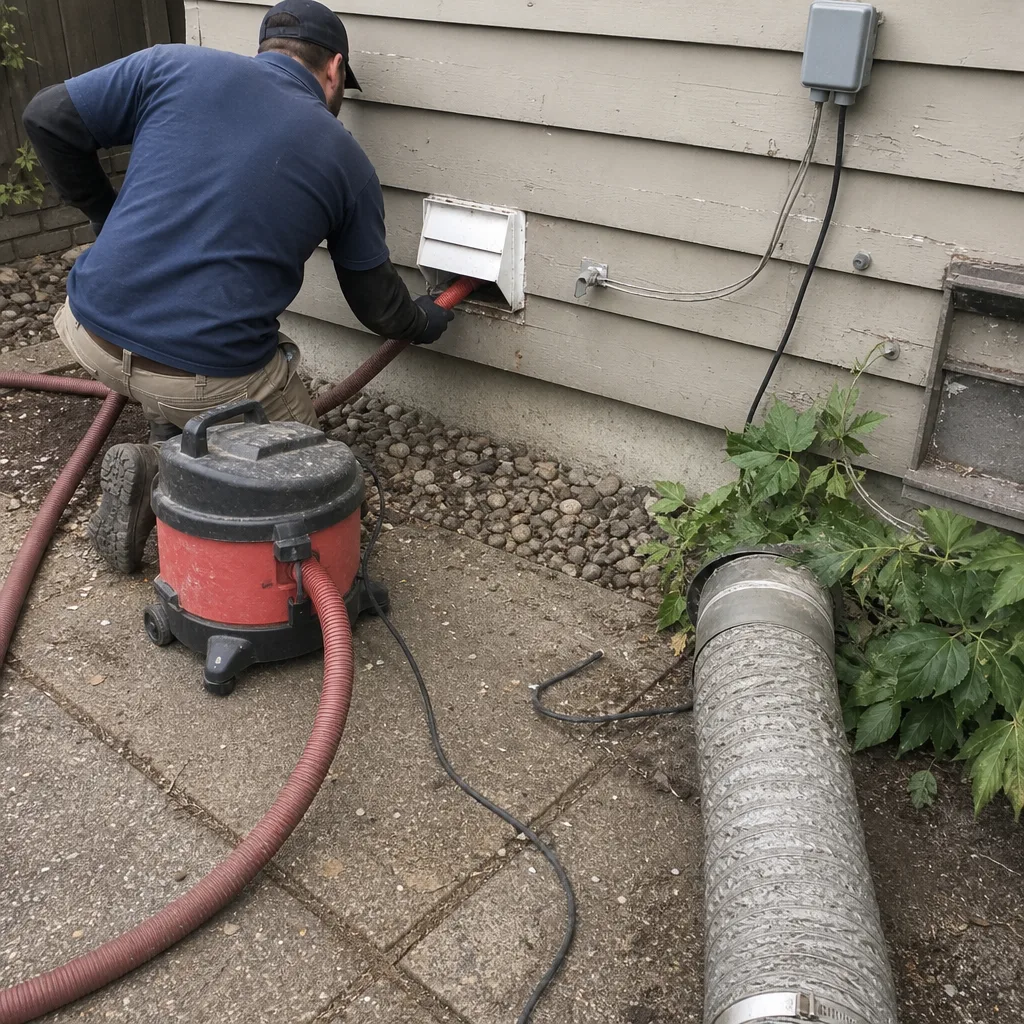
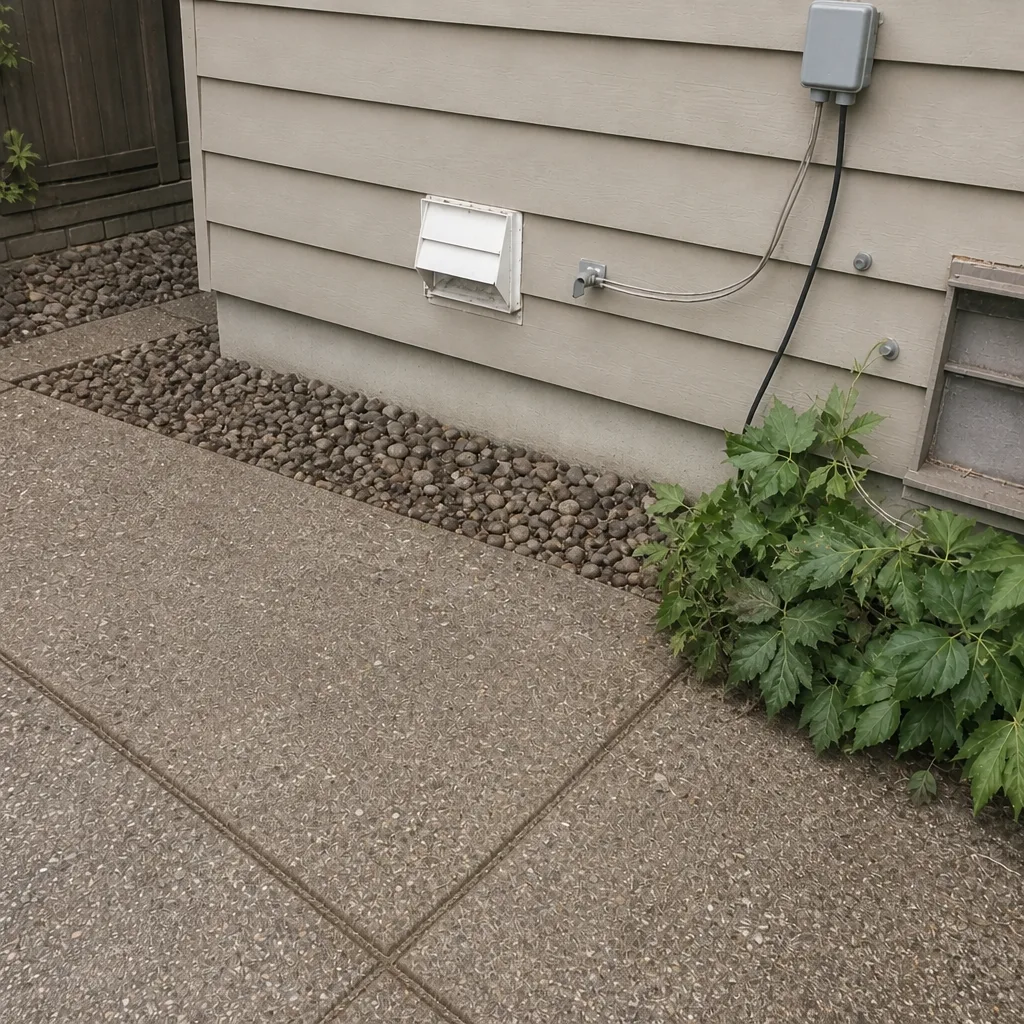
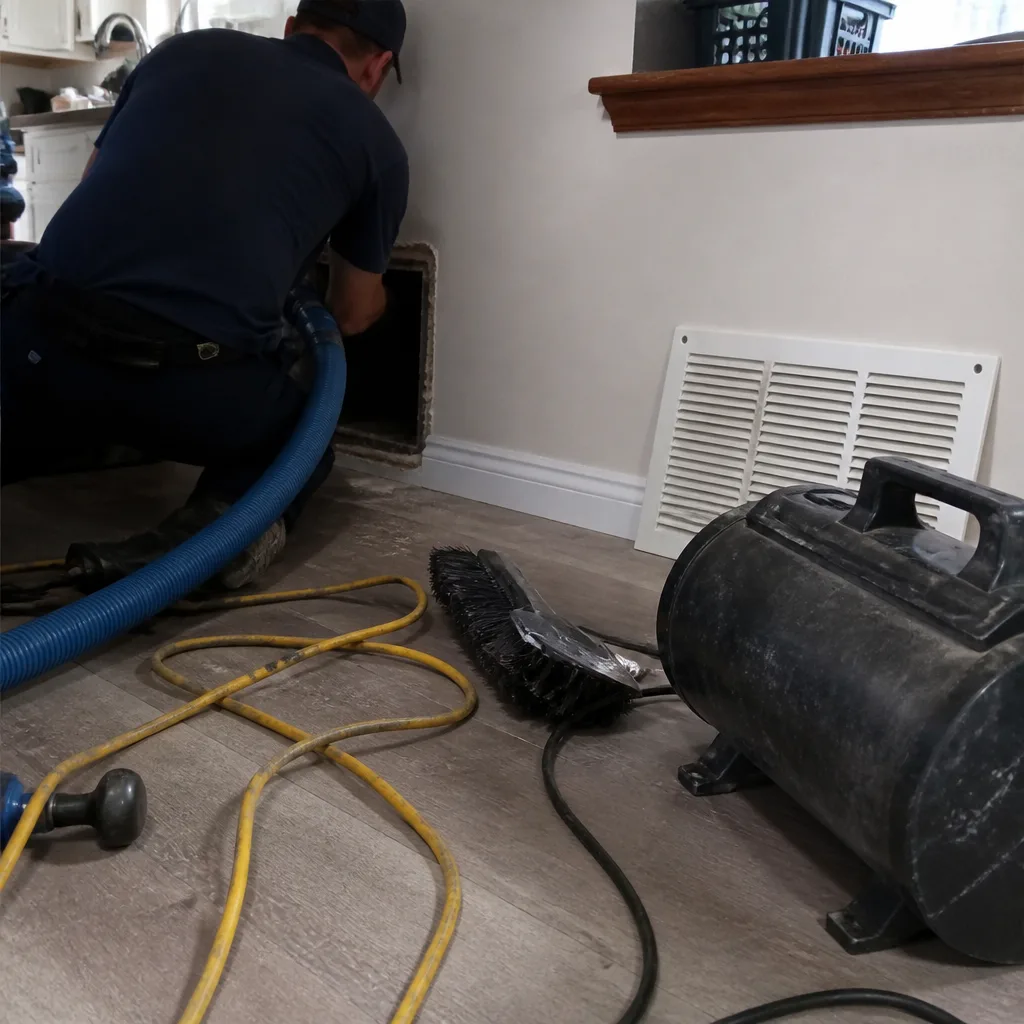
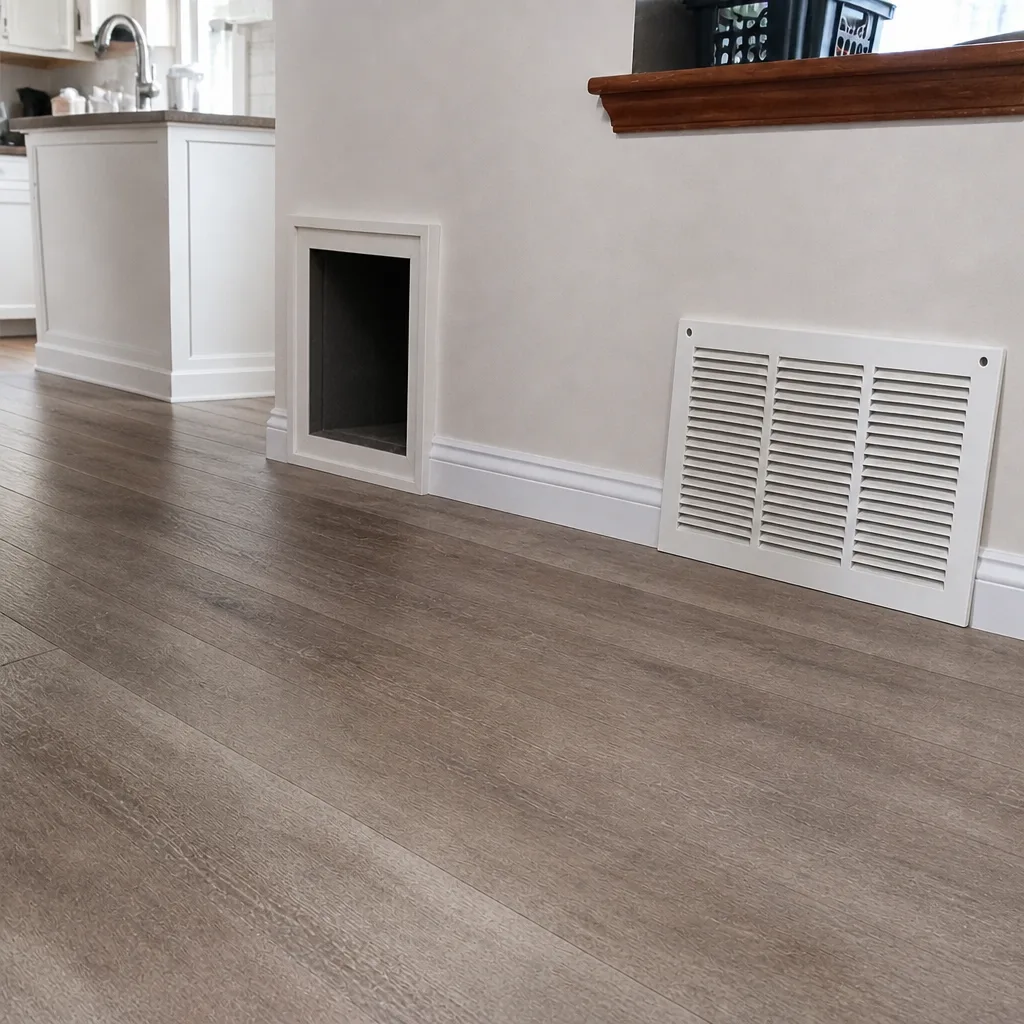
Whole-system duct and dryer vent check with before-and-after photos - you see exactly what came out of your vents
That "$99 whole-house special" is a bait ad - the real number appears once they are in your hallway, or the "clean" is a shop-vac at the register. We photograph the inside of your ducts before and after instead.
Air Duct Cleaning Maintenance Schedule: What to Do and When
The “3-to-5-year rule” for duct cleaning gets repeated everywhere, and it was written for a median American home. A Marysville house is not that home. Six damp months of heating season, a housing stock that ranges from 1960s ranch homes to recent construction with long flex-duct runs, and a marine-influenced climate that keeps relative humidity elevated well into spring all change the contamination timeline. A fixed calendar interval can’t account for any of it.
This guide replaces the generic schedule with a condition-based framework: what to check, when a check should trigger a cleaning, and how to tie all of it to your annual HVAC service instead of an arbitrary date on the wall. You’ll learn which signs in Marysville homes actually matter, which are noise, and how to tell the difference before you spend money.
Quick Answer
Most Marysville homes don’t need duct cleaning on a fixed timetable. A condition-based schedule works better: inspect the system once a year at the same time as your HVAC service, clean when you find a specific trigger (visible debris, a renovation, a new pet, a new allergy, a filter that loads up faster than it used to), and expect a typical interval of three to five years only for homes with no other risk factors. Homes with pets, recent remodeling, or older flex duct often need attention sooner.
Styles & brands we work with
- Whole-home duct cleaning
- Dryer vent cleaning
- Camera inspection
- Sanitizing & deodorizing
Table of Contents
- Why Marysville Homes Don’t Fit a Universal Schedule
- The Wet Heating Season and Microbial Load
- Five Triggers That Override the Calendar
- What Your Filter Tells You About Your Duct System
- Build an Inspection Checklist Tied to Annual HVAC Service
- Why Post-Cleaning Filtration Extends the Interval
- Contact Cleaning vs. Blow-and-Pray: What to Ask For
- When Cleaning Isn’t Enough: Duct Repair and Sealing
Why Marysville Homes Don’t Fit a Universal Schedule
Duct contamination is a product of three variables: what’s in the air, how long it stays there, and how the system moves it. In Marysville, all three behave differently than they do in the dry Southwest or the humid Southeast. The heating season runs long, which means the furnace and duct system are operating for six or more months each year. Every one of those hours moves air, dust, and moisture through the same plenum and branch runs.
Marysville’s housing stock adds a second layer. Many homes built in the 1970s and 1980s were ducted with flex lines that have now seen decades of thermal cycling. Flex duct has a ribbed interior that catches debris in a way sheet-metal duct does not, and where the inner liner has started to deteriorate, those ribs hold moisture and organic material together. Older duct systems in Marysville tend to accumulate faster than the same square footage in newer construction with rigid trunk lines.
What that means practically: two identical homes on the same street in Marysville can have genuinely different cleaning needs. One may be fine for five years. The other, if it has pets, a long heating season, and 1980s flex, may be overdue at three. That gap is the whole argument for condition-based scheduling over a calendar rule.
- Climate variable: long damp heating season means more hours of system operation with moisture present.
- Housing variable: age and type of duct construction, especially flex vs. rigid.
- Occupant variable: pets, allergies, smoking, occupancy density, renovation history.
- System variable: filter quality, airflow design, whether the return is properly sealed.
The universal interval ignores every one of those. A maintenance framework that takes them into account takes about thirty minutes a year to run.
The Wet Heating Season and Microbial Load
Western Washington’s heating season occupies roughly half the year, and it’s the wet half. The practical effect on a duct system is that the interior surfaces stay in a humidity range that supports microbial growth for extended periods. Dry climates mostly deal with dust; damp climates deal with dust plus whatever has started growing on it. The two are not the same problem and they don’t respond to the same maintenance schedule.
Duct interiors on the return side are usually the first to show it. The return plenum pulls air from living space, including bathrooms, kitchens (if the return is placed poorly), and laundry areas. That air carries moisture, cooking aerosol, and skin cells. When it cools inside the duct, condensation forms. The combination of a slow moisture film and an organic dust load is exactly what microbial growth needs.
What we see on the supply side in Marysville tends to be different: mineral dust, fiber from deteriorating liner, and settled debris at the branch takeoffs where air velocity drops. Neither side is usually visible from a register, which is why the annual inspection in the next section matters more here than it would in a dry climate.
This is also why the method matters as much as the frequency. Blowing air through the system to “clean” it, without mechanical contact and without containment, moves microbial material off the duct walls and into the breathing zone. The professional standard is contact cleaning combined with HEPA-rated negative-air capture, which is what air duct cleaning here is built around. The contaminant gets agitated, then captured at the source before it can settle back in the ducts or in your living room.
What moisture in the duct system looks like from the register
You’re not going to see microbial growth from the floor. What you can look for: a musty or damp-earth smell when the furnace first comes on for the season, faint discoloration around the register grille, condensation on the register face on cold mornings, and a filter that shows a dark, blotchy pattern rather than uniform gray dust. Any of those is worth a look inside the system, not just a filter change.
Five Triggers That Override the Calendar
This is the heart of the framework. Instead of marking a date on the calendar, mark the trigger conditions. When any of the following shows up, run the inspection detailed in the next section and let it decide whether the system needs cleaning now.
- Renovation debris. Any project that involves cutting drywall, sanding, or removing flooring sends fine particulate through the return system over the following weeks. Even if the ductwork was sealed at the registers, dust gets past. Schedule the inspection within a month of finishing the project, not a year later.
- Pet dander load. A single dog or cat produces dander continuously, and dander is light and sticky enough to coat duct interior surfaces. Homes with two or more pets, or with a pet that sheds heavily, accumulate considerably faster than pet-free homes. A pet added to the household is effectively a trigger event.
- HVAC component change. A new furnace, air handler, or AC coil means the duct system was opened and inspected. That’s an ideal moment to check and clean, because any construction dust from the install is captured in one service visit rather than lingering.
- Occupant allergy onset. If someone in the home has developed new respiratory symptoms that correlate with time spent indoors, the duct system should be examined before assuming it’s unrelated. We don’t diagnose anything, but we can tell you what’s in the system and how to remove it.
- Visible contamination event. Water intrusion anywhere in the building, pest activity in the duct system, a fire nearby, or a smoke event. Any of these justifies an immediate inspection regardless of last cleaning date.
Older homes often hit two or three of those at once. A 1970s Marysville house that just got remodeled, has two dogs, and hasn’t had the ducts looked at since the last furnace swap is a good candidate for cleaning now, not three years from now.
What Your Filter Tells You About Your Duct System
The filter is the cheapest diagnostic you have, and it’s underused. Filter loading rate tells you how fast particulate is entering the system. If your filter used to last three months and now it’s visibly loaded at six weeks, something changed: more dust generation in the home, more dust entering the return, or bypass around the filter. That change is the signal to inspect the ducts themselves.
Here’s how to read it:
- Uniform gray loading, consistent over time: normal dust load. Nothing alarming. Continue the annual inspection.
- Fast loading (filter clogs well before the expected change interval): more particulate entering the return than usual. Check for duct leaks, recently started renovation, or a filter bypass gap at the housing.
- Blotchy or dark staining on the filter: possible moisture involvement. Inspect the return plenum for condensation or liner damage.
- Filter loading dramatically unevenly (one side dark, one side clean): airflow or bypass problem, not a duct-cleaning problem per se, though the duct system likely needs inspection too.
- Debris visible on the downstream side of the filter: the filter isn’t sealing against the housing. Fix that before doing anything else, or cleaning won’t hold.
Filter maintenance intervals also matter in setting expectations. High-MERV filters reduce what reaches the duct system, which extends the useful interval between cleanings. But they also load faster, which means higher change frequency. The filter and the duct schedule are connected, not independent.
Choosing the right filter for a Marysville home
For most homes, an appropriately sized pleated filter in the MERV 8 to MERV 13 range is a reasonable middle ground: enough efficiency to reduce the particulate load on the ductwork, not so restrictive that it starves a standard blower. Oversized media cabinets, which many newer Marysville homes were built with, take a thicker filter that loads more slowly and reduces change frequency.
Build an Inspection Checklist Tied to Annual HVAC Service
The cleanest way to run a maintenance schedule is to attach it to something you already do: your annual HVAC service appointment. Once a year, while the technician is on site, run through the following. It takes minutes, doesn’t require special tools for most items, and it produces a documented record.
- Confirm the filter change cycle. Log the date every filter change. Two consecutive changes gives you a baseline rate. Anything faster is a flag.
- Check every register. Remove the cover on each supply and return, look at the visible duct interior. Look for debris accumulation, discoloration, or condensation. Note any register that looks worse than others.
- Listen to the system. Whistling or rushing at one register means airflow is concentrated there, often because another branch is restricted or leaking. That’s a duct-repair question as much as a cleaning question.
- Smell the first heating cycle. A distinct musty or dusty smell at the start of the heating season is normal for a few minutes. Persistent smell throughout the season is not, and warrants inspection.
- Look at the return grille face. Faint dust shadowing around the frame, or a darkening of the painted surface, often signals ongoing return-side dust movement.
- Note renovation or occupancy changes. Any new pets, remodels, water intrusion, or new allergy diagnoses go on the inspection record for the next cycle.
- Record the inspection date and findings. A simple note is enough. Two or three years of records lets you see the loading trend line and predict cleaning accurately.
Doing this once a year is more useful than any calendar-based rule, because it catches the actual triggers that mean a cleaning is coming due rather than guessing. If you don’t want to do it yourself, having it done as part of an annual HVAC cleaning service visit is the natural place for it.
Why Post-Cleaning Filtration Extends the Interval
Cleaning the ducts without improving filtration is like washing a car and then parking it under a tree. The system is clean for now, but the same particulate source is still running. Three things change that after a professional cleaning:
- Contact cleaning removes the substrate. Brush agitation against the duct walls scours the surface, including the ribbed interior of flex duct where debris clings. Debris that isn’t physically agitated stays put, and the next dust layer binds to it. Systems cleaned by contact stay clean longer because there’s nothing left for new dust to attach to.
- HEPA containment removes the debris entirely. Negative-air containment with HEPA-rated filtration captures dislodged material at the source, so it doesn’t settle back into other branches or get pushed into the living space. Without containment, cleaning redistributes more than it removes.
- Upgraded filtration slows re-accumulation. A properly sized, high-efficiency filter at the air handler catches incoming particulate before it can coat the cleaned duct walls. Homes that add a whole-home air quality system from Honeywell or Aprilaire after cleaning generally see the interval between cleanings stretch.
Post-cleaning filtration isn’t only the filter itself. Whole-home systems work alongside the standard filter to reduce both particulate load and, in some configurations, humidity. In Marysville’s climate, humidity management is the more valuable lever: a home that stays in a moderate humidity range keeps the duct interior from entering the damp range that drives microbial growth in the first place.
We carry and install both Honeywell and Aprilaire equipment, and we install it as part of a post-cleaning plan, not as an add-on to an unrelated visit. Where the contamination event was significant – heavy microbial load, post-remediation, or serious allergen accumulation – we bring in Abatement Technologies air-purification equipment for the cleaning itself before recovering the system to normal operation.
Contact Cleaning vs. Blow-and-Pray: What to Ask For
Once you’ve decided to clean, the maintenance framework only works if the cleaning actually removes contamination. The method determines that. There are essentially two models out there:
Blow-and-pray. A vacuum at one register, compressed air or a blower at another. Air moves, debris loosens, some of it is captured downstream, some of it redistributes inside the system, some lands in the living space. The cleaning looks conclusive because dust visibly comes out of the register, but the duct walls aren’t scoured and the interior surfaces aren’t restored to a clean state.
Contact cleaning with containment. A rotary contact brush agitates the duct walls mechanically while a HEPA-rated negative-air unit maintains a pressure differential in the system. Debris is physically dislodged and captured in real time. We use the Rotobrush contact-cleaning system for the agitation side and Nikro HEPA-rated negative-air equipment for the containment side, and the combination is what makes a clean system stay clean longer.
When you talk to a provider, ask three questions:
- Do you use a contact brush, or compressed air?
- What kind of vacuum and filtration do you use – HEPA-rated, or something less?
- Will I get before-and-after photos of my actual duct interior?
The answers are the whole difference. A provider who can’t show before-and-after photos is unlikely to be one you can verify.
When it’s a duct-problem rather than a cleaning problem
Sometimes the inspection finds that the ductwork itself is compromised: disconnected joints, torn flex liner, or a return that’s pulling air from an unconditioned crawl space. In those cases cleaning alone is short-lived, because dust will re-enter through the same leaks. We offer duct repair and sealing as part of the same service line, and when the inspection finds leaks, sealing is the right sequence before or in place of a full cleaning.
When Cleaning Isn’t Enough: Duct Repair and Sealing
Some duct problems in Marysville homes aren’t fixable by cleaning. The most common findings that change the plan:
- Disconnected joints. Flex duct segments tend to separate where the collar meets the trunk. The system loses airflow and pulls dust from wherever the disconnected segment is sitting. Cleaning is wasted until the joint is reconnected and sealed.
- Torn or collapsing inner liner. Older flex duct sometimes has an inner liner that’s separating from the outer insulation. The liner becomes a contaminant source, and no amount of cleaning removes it. The right answer is replacement of that segment, not repeated cleanings.
- Return air drawn from a crawl space or attic. Any return that pulls air from outside the conditioned envelope brings in whatever is in that space, including soil particulate, insulation fiber, and moisture. Sealing the return to the envelope is the first step, not cleaning.
- Improperly sized or restrictive filter housings. If the filter housing is undersized for the system’s airflow, the filter bypasses and dust enters the ducts anyway. Fix the housing before scheduling cleaning.
Working these into the inspection checklist saves money. A cleaning scheduled on a system with a torn liner or a disconnected joint is a cleaning that doesn’t hold. Better to find and fix the structural issue first, then clean.
Common Mistakes to Avoid
- Cleaning on the calendar instead of on evidence. Booking a cleaning every two years without checking anything means you’ll clean too often in some homes and not often enough in others. The inspection takes minutes and prevents both errors.
- Assuming a new furnace solves the duct problem. A new air handler is a good moment to inspect and clean the ducts, because the installation often stirs construction dust through the system. Skipping the inspection at that moment leaves the new system pulling through a loaded duct.
- Skipping the filter-bypass check. A high-MERV filter that isn’t sealed to the housing lets dust pass right around it. That dust lands in the ducts. If you’re upgrading filters without checking the housing fit, you may be doing nothing at all.
- Hiring a blower-only service. A cheap cleaning that uses compressed air without a contact brush and without HEPA containment can stir up more than it removes. Filter and containment matter more than the price on the estimate.
- Ignoring a musty smell across the heating season. What looks like a minor maintenance item in October is a bigger one by February. Persistent smell through the season is a signal to look inside the system, not to keep changing filters.
- Scheduling cleaning before fixing duct leaks. Cleaning a leaky system and then watching it re-dirty over a year is a waste of both visits. Seal first, clean after, unless the inspection finds no leaks.
- Forgetting the dryer vent. The schedule that covers supply and return ducts needs to cover the clothes dryer too. A dryer vent that’s not been serviced is a fire-risk reduction opportunity that gets missed in most home maintenance checklists.
See the difference
 Before
 After
 Before
 After
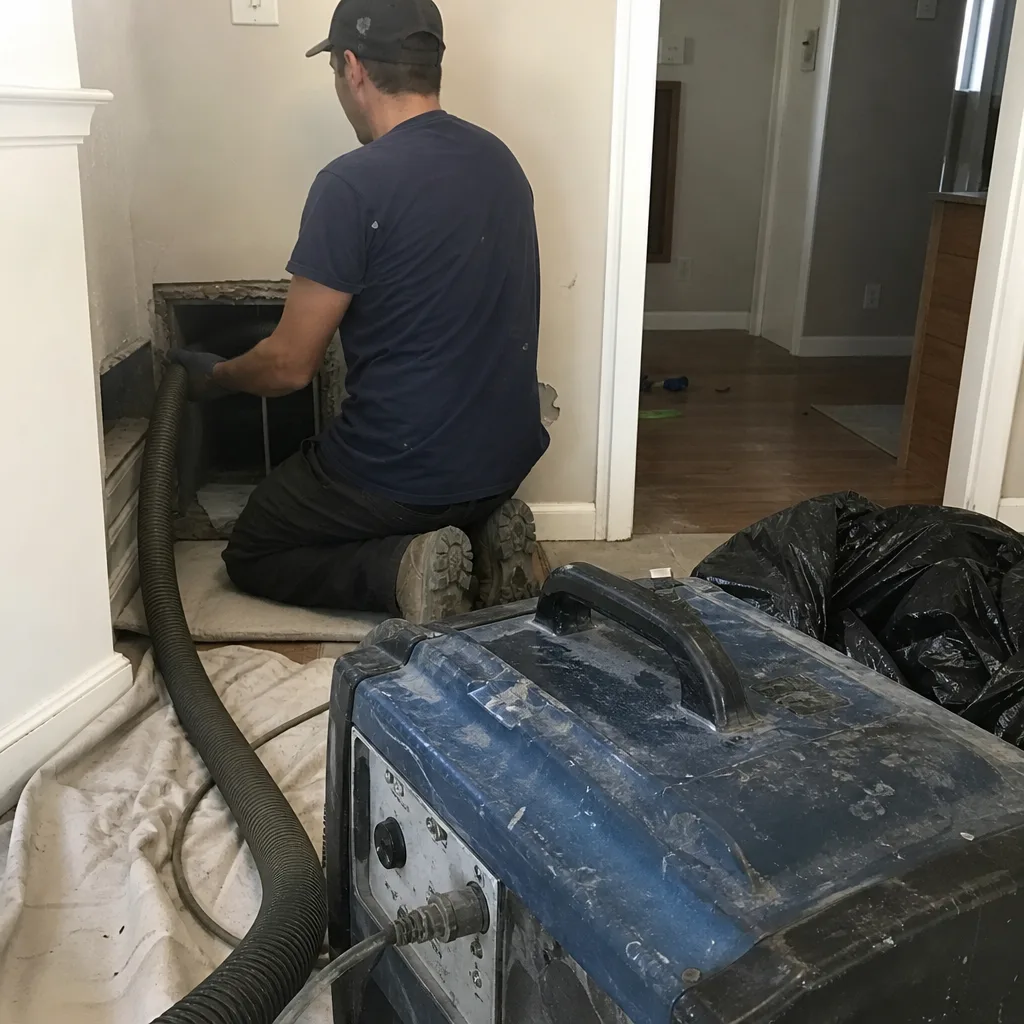 Before
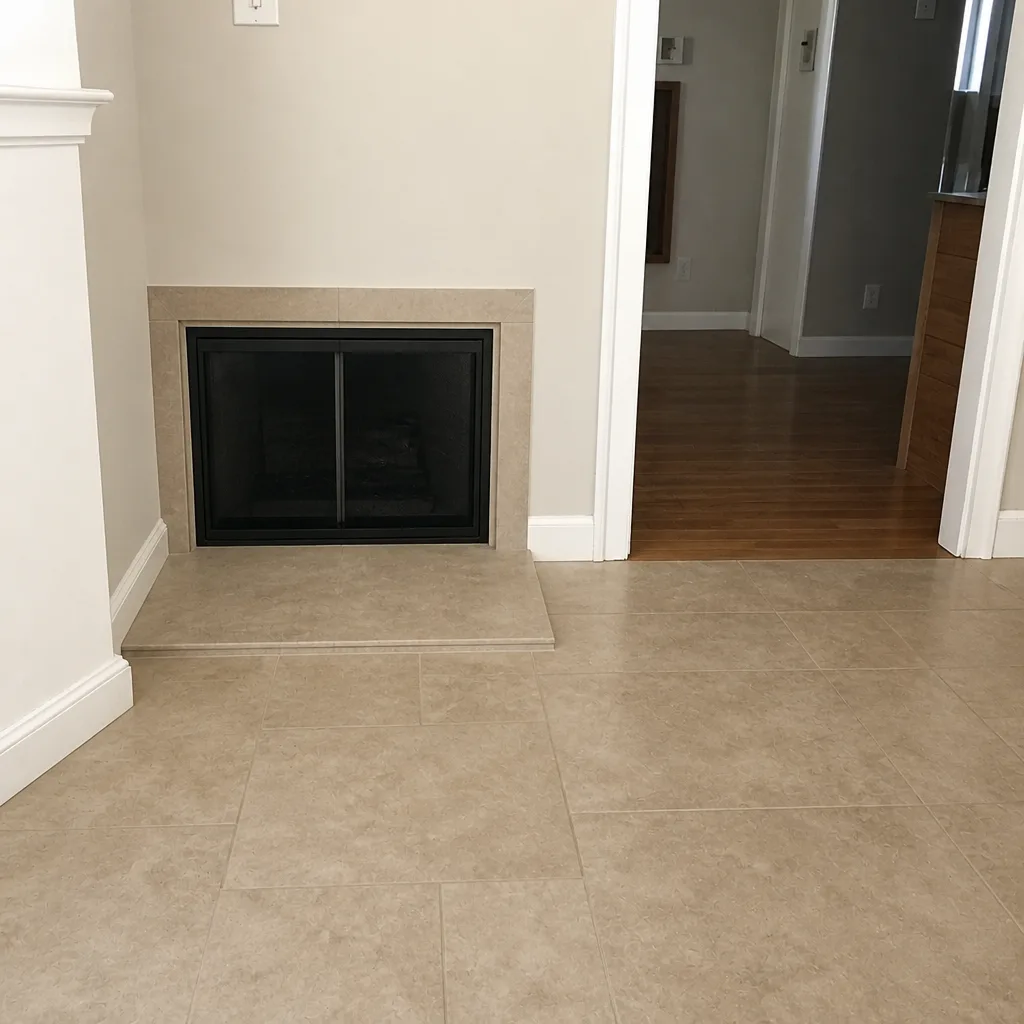 After
When to Call a Professional
Some findings belong in the annual inspection, and you can run those yourself. Others call for a trained technician: persistent musty smell through the heating season, visible debris buildup at multiple registers, a renovation that involved cutting through drywall, water damage anywhere near the ductwork, or a home that’s been given a new pet or a new allergy diagnosis. Dryer vent cleaning is a specific trigger on its own; a vent that hasn’t been serviced in years, especially on a dryer that’s taking longer to dry a load, is worth a professional look as a fire-risk reduction measure rather than a DIY project.
Marysville Air Duct Cleaning Co offers free estimates in Marysville. Our technicians have up to 10 years of experience, and we run professional-grade equipment including Rotobrush contact cleaning, Nikro HEPA containment, and Abatement Technologies for elevated contamination scenarios. Call (888) 847-8751 to schedule.
Frequently Asked Questions
Most Marysville homes should run an annual inspection and clean when a specific trigger appears, which on average works out to every three to five years. Homes with pets, recent renovations, or older flex-duct systems usually fall on the shorter end of that range. Cleaning on evidence rather than a fixed calendar gives a more accurate schedule for any specific house.
Yes, because the extended damp heating season keeps duct interiors in a humidity range that supports microbial growth for months at a time, which dry climates do not. The result is that Marysville duct systems can accumulate contamination differently than homes in drier regions, and the inspection step in an annual HVAC service catches it earlier. Cleaning at the right interval, with the right method, matters more here than in a typical dry climate.
Contact cleaning uses a mechanical brush to agitate the duct walls while a HEPA-rated negative-air unit captures the dislodged debris, so the duct interior is physically scoured and the contamination is removed. A blower-only service moves air through the system without contact cleaning, so much of the debris is redistributed rather than removed. The before-and-after photos a contact cleaner can show you are the practical difference.
You can, but cleaning more often than the actual condition warrants is wasteful and cleaning less often than it warrants leaves contamination in the system. Identifying the actual triggers (renovation dust, pet load, moisture involvement, duct leaks) is what makes either error avoidable. The inspection takes minutes once a year and is cheaper than a cleaning on either end.
Ask for before-and-after photos of your own duct interior, not stock images, and ask what equipment the provider is using for containment. A proper job uses a HEPA-rated negative-air unit during the cleaning so debris is captured at the source. Rotobrush contact cleaning plus Nikro HEPA containment produces a duct system you can inspect after the fact, if you want to.
Whole-home air quality products from Honeywell or Aprilaire can be a good fit when post-cleaning duct loading keeps coming back too quickly, or when the home has persistent humidity that suits microbial growth in the ducts. We carry and install both, and we install them as part of a post-cleaning plan rather than an unrelated one. Call (888) 847-8751 for a free estimate. We answer 24/7. Fast dispatch from 7am to 7pm, Sunday through Friday.
Dryer vent cleaning belongs on the same annual schedule as the duct inspection, and it’s a fire-risk reduction service. A vent that’s slow to dry a load, or that hasn’t been serviced in several years, is a good candidate for a professional check. See our dryer vent cleaning page for what the service covers. Call (888) 847-8751 for a free estimate.
The Bottom Line
The calendar-based duct cleaning schedule gets replaced here with a condition-based framework: inspect once a year alongside HVAC service, clean when a trigger shows up, and expect three to five years between cleanings for Marysville homes with no other risk factors. The wet heating season, the older flex-duct inventory, and the occupant variables that matter most (pets, renovation, allergy onset) all push that number shorter. Contact cleaning with HEPA containment is what makes a cleaned system stay clean longer, and post-cleaning filtration from Honeywell or Aprilaire extends the interval further. The annual inspection is the smallest part of the schedule and the most important.
If you’d rather not run the checklist yourself, or you want a look inside the system before deciding, the estimate is free. The local pro is licensed and insured as their state requires, and we work to a single flat price per system agreed before any work starts. Contact Marysville Air Duct Cleaning Co to get an inspection and estimate scheduled. Call (888) 847-8751. We answer 24/7. Fast dispatch from 7am to 7pm, Sunday through Friday.
Written by the team at Marysville Air Duct Cleaning Co.