
Last updated November 25, 2026
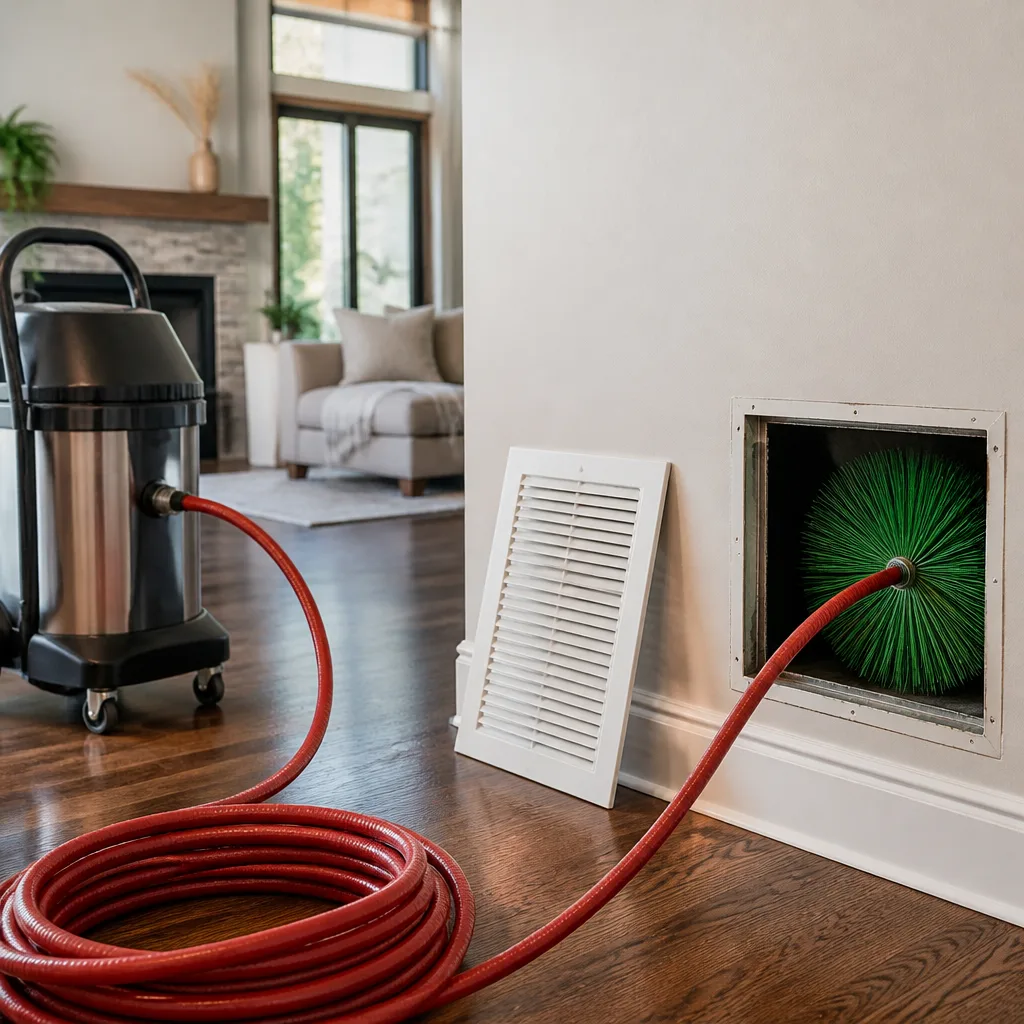 Whole-home duct cleaning
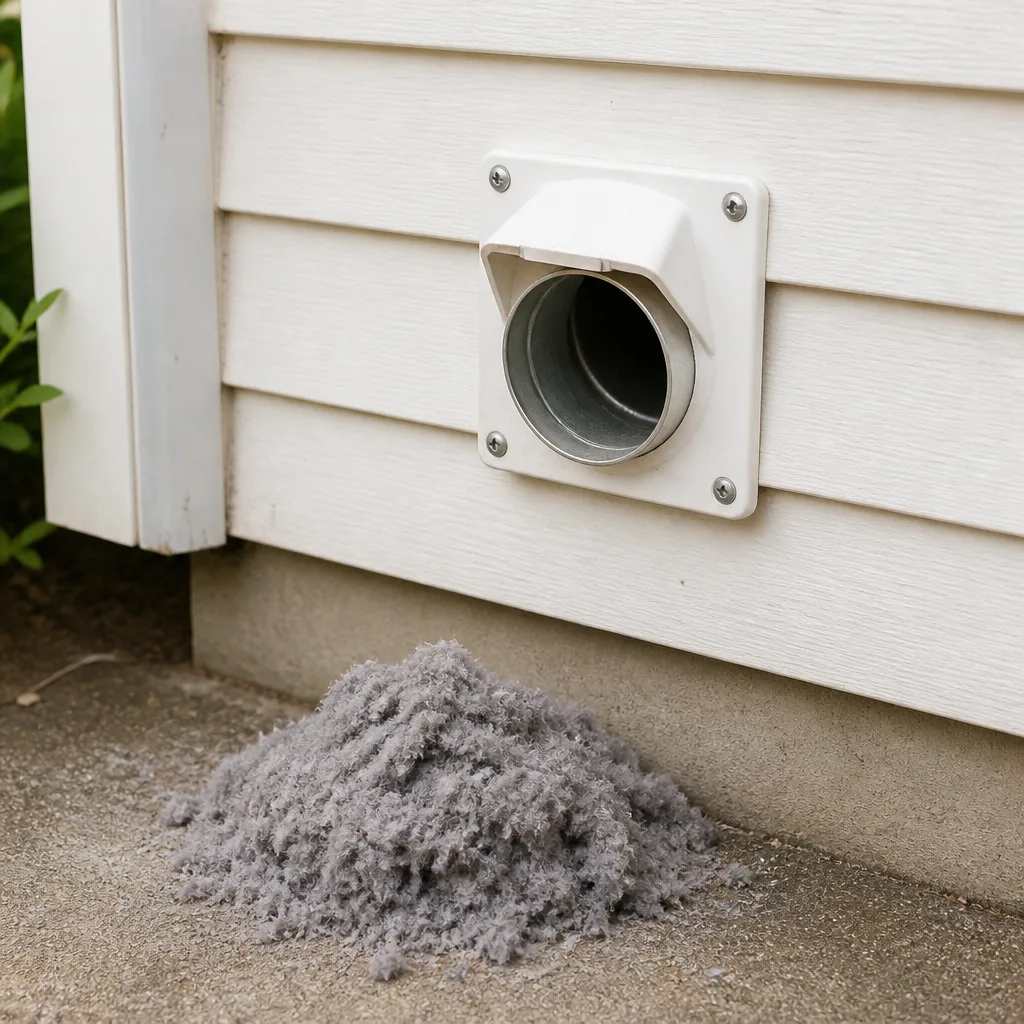 Dryer vent cleaning
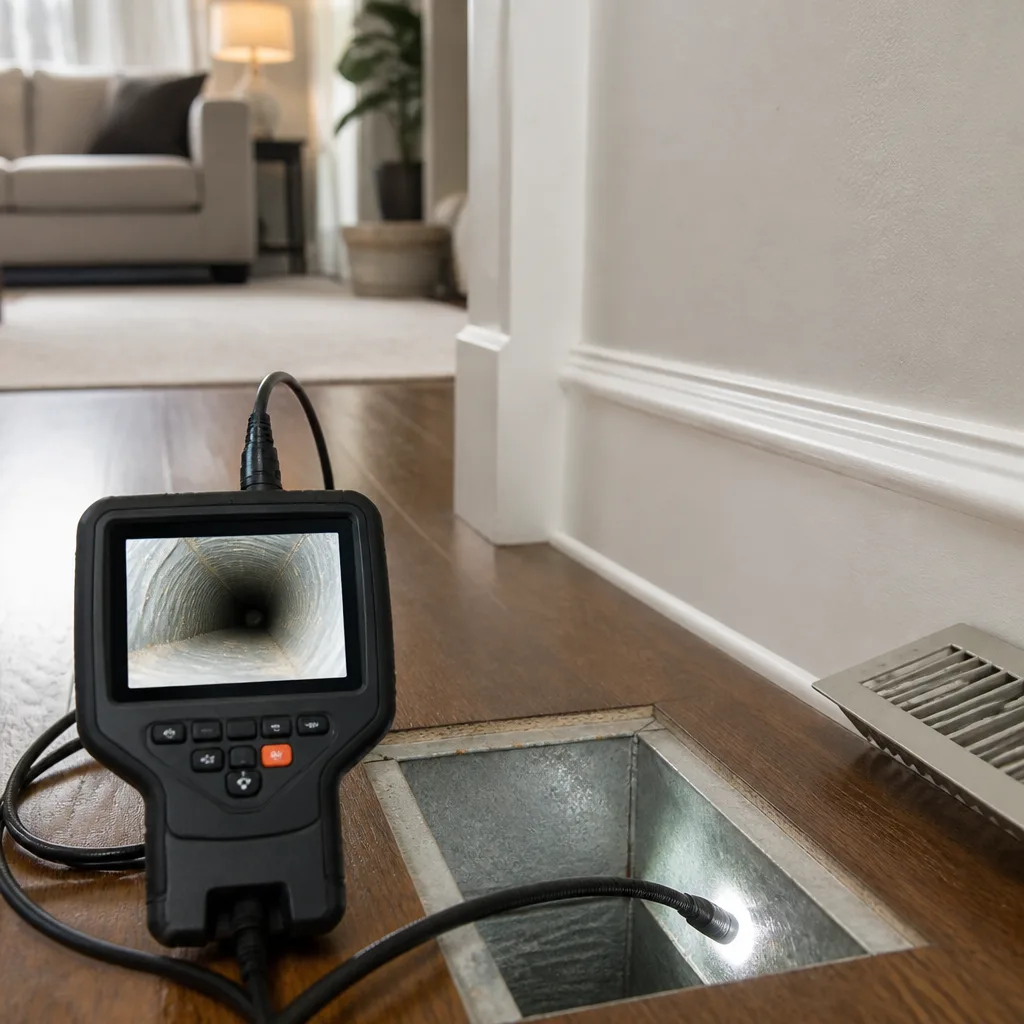 Camera inspection
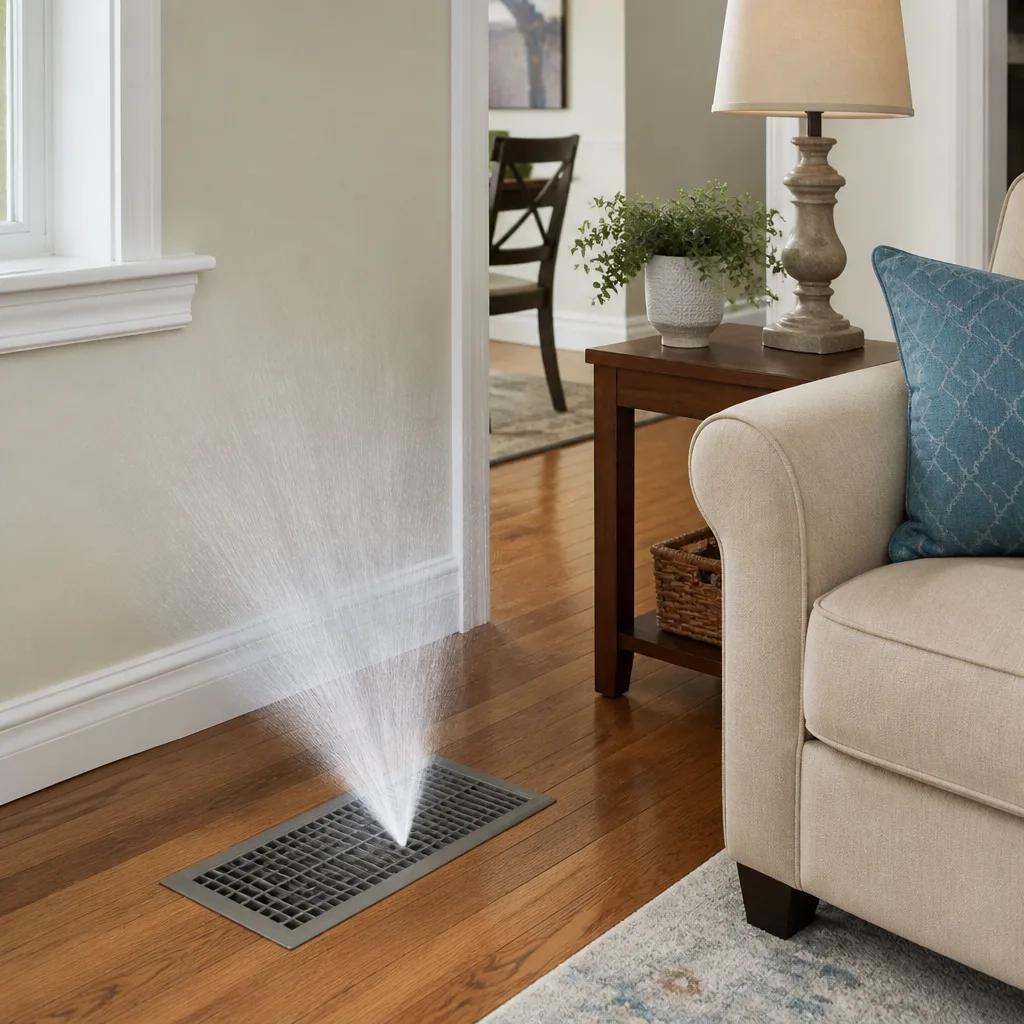 Sanitizing & deodorizing
Whole-system duct and dryer vent check with before-and-after photos - you see exactly what came out of your vents
That "$99 whole-house special" is a bait ad - the real number appears once they are in your hallway, or the "clean" is a shop-vac at the register. We photograph the inside of your ducts before and after instead.
Air Duct Cleaning Troubleshooting in Marysville: Common Problems and How to Fix Them
If your ducts were cleaned six months ago and the dust is already back on your registers, the problem likely isn’t your house. It’s how the job was done. Most of what homeowners in Marysville try to self-diagnose, the persistent dust film, the uneven airflow upstairs, the musty smell that creeps back every spring, traces to an incomplete cleaning method rather than defective ductwork. Blowing air through a system without physically contacting the duct walls dislodges some debris and leaves the rest behind, and the rest is what you keep breathing. This guide teaches you to tell the difference between a duct system problem and a service-quality problem, so you can decide whether you need a re-clean, a repair, or a remediation specialist.
Quick Answer
Persistent dust, uneven airflow, and returning odors after a cleaning usually mean the original job skipped the return-air side, used air-stirring instead of contact cleaning, or ignored leaks that let contamination back in. Fix it by verifying what was actually done, checking the return side and the air handler, then hiring a contractor who uses brush-and-capture equipment with HEPA-rated containment. Only genuine mold growth, post-renovation debris, or repeated moisture intrusion calls for a remediation specialist.
Styles & brands we work with
- Whole-home duct cleaning
- Dryer vent cleaning
- Camera inspection
- Sanitizing & deodorizing
Table of Contents
- How do you tell a duct problem from a cleaning problem?
- Why the return-air side gets skipped (and why it matters)
- What register dust patterns reveal about cleaning depth
- Mold odor coming back: incomplete removal or new moisture?
- Post-service checkpoints you can inspect yourself
- When you need a remediation specialist instead of a re-clean
- How Marysville’s climate and housing shape duct problems
- Common mistakes to avoid
How do you tell a duct problem from a cleaning problem?
Start by separating symptoms by cause. A duct system problem is structural: a leak, a crushed run, a disconnected joint, a failing blower. A service-quality problem is procedural: the cleaning missed a section, used the wrong method, or left containment off. The two produce overlapping symptoms, which is why homeowners guess wrong. Here’s how to sort them.
Ask three questions about your own home before you call anyone:
- Did the symptom exist before the cleaning? If dust or odor was present before and unchanged after, the job didn’t address the source.
- Did the symptom return within a few months? Fast return points to missed debris rather than new accumulation.
- Is the symptom concentrated in one area? A single cold room or one dusty register suggests an airflow or leak issue on that branch, not a whole-system cleaning failure.
In our experience, the majority of “my ducts are dirty again” complaints we hear in Marysville come down to one of two things: the return-air side was never cleaned, or the technician used a blower-only approach that pushed debris into the living space instead of capturing it. Contact cleaning with a Rotobrush-style brush system physically agitates the duct wall; HEPA-rated negative-air equipment then pulls the loosened material into a filtered containment unit. When that sequence is skipped, the dust you see on your registers is the debris that never left.
A genuine duct problem behaves differently. Airflow that’s weak in one room and strong in another, even after a cleaning, usually means a crushed or disconnected flex run, a damper stuck closed, or a leaky joint pulling attic air into the system. Those need a repair, not another cleaning. If you’re not sure which category you’re in, a qualified technician can scope the system and show you what’s inside before any work begins.
Why the return-air side gets skipped (and why it matters)
The return-air side is the most commonly skipped section in blower-only duct cleaning jobs, and it’s also where the heaviest contamination collects. Return ducts pull air from your living space back to the air handler, so they carry the full dust, pet hair, and skin-cell load of the house, plus whatever the filter misses. Supply ducts deliver filtered air; returns do the dirty work. A cleaning that treats only the supply side leaves the largest debris reservoir untouched, and that reservoir keeps feeding the system.
Why does it get skipped? Return runs are often harder to access, sometimes hidden behind finished walls or routed through tight chases. A contractor working fast with a blower and a hose will clean what’s easy to reach and call it done. The homeowner has no way to know unless they look.
What you can check:
- Return grilles: Pull one and look at the duct interior with a flashlight. If you see a visible dust film on the metal or flex liner after a recent cleaning, the return was missed.
- Air handler closet: The return plenum often connects here. Look for dust buildup around the cabinet seams and the filter slot.
- Filter condition: A return that’s still loading filters quickly after a cleaning is likely still shedding debris.
In Marysville, where many homes have a single central return and a handful of supply registers, the return carries a disproportionate share of the load. Cleaning the supplies without the return is like vacuuming a room and leaving the pile in the corner. The full method matters: contact cleaning on both sides, HEPA containment throughout, and a technician who can show you before-and-after photos of what came out of the return specifically.
If you’re comparing contractors, ask directly whether the return-air side is included and whether they’ll photograph it. The answer tells you a lot about the method behind the price. For a full explanation of how a proper air duct cleaning should be scoped, our service page walks through the sequence.
What register dust patterns reveal about cleaning depth
The dust pattern on and around your registers is a diagnostic tool most homeowners ignore. Where dust settles, how fast it returns, and which registers it favors all point to what happened during the last cleaning and what your airflow is doing now.
Here’s how to read the patterns:
- Dust concentrated around the grille edges and screws: typically from air leaking past a poorly sealed register boot, pulling attic or wall-cavity air into the room. A sealing issue, not a cleaning issue.
- Uniform light dust across all registers within weeks of a cleaning: the system is still shedding debris from an uncleaned section, most often the return or the air handler.
- Heavy dust on one or two registers only: a branch-specific problem, such as a disconnected or crushed flex duct dumping air and dust into that zone.
- Dark staining or streaking above a register: air movement pushing dust against the wall, often a sign of excessive static pressure from a restricted filter or undersized return.
Contact cleaning changes these patterns. After a proper brush-and-capture job, registers may show a light resettling of fine dust for a few days as disturbed air clears, then stay clean for months. If you see heavy accumulation within weeks, the depth wasn’t there.
In Marysville’s newer subdivisions, where flex duct runs are common and register boots are often sealed with minimal mastic, boot leakage is a frequent culprit behind register dust. Older homes with rigid metal ductwork tend to show more joint leakage and internal corrosion instead. Knowing which style of home you’re in narrows the diagnosis before anyone touches the system.
Mold odor coming back: incomplete removal or new moisture?
A musty smell that returns after a cleaning is a genuine fork in the road, and getting it wrong wastes money. The odor is either residue from mold or organic material the first cleaning didn’t fully remove, or evidence of a new moisture intrusion event that started after the service. The two require different responses.
How to tell them apart:
- Timing: Odor that fades and comes back within weeks of cleaning points to incomplete source removal. Odor that appears months later, often after a rainy stretch, suggests new moisture.
- Seasonal pattern: Odor that shows up each fall as the system switches to heating can be dust burning off the heat exchanger, not mold at all.
- Location: Odor strongest near the air handler or a specific return often traces to condensation in the plenum or a wet evaporator coil. Odor strongest at supply registers points to contamination inside the duct runs.
- Visible evidence: Look for water staining, rust, or damp insulation around the air handler, the coil, and any duct passing through an unconditioned space.
Marysville’s wet winters and shoulder seasons make moisture the leading cause of duct odor in this area. A duct run that passes through a vented crawlspace or an attic with poor ventilation can pick up condensation during cool, damp months and grow odor-causing organisms on the liner. Cleaning without addressing the moisture source only resets the clock. That’s why we pair cleaning with HVAC cleaning and inspect the coil and plenum at the same time, because a clean duct connected to a wet coil stays a problem.
Elevated contamination, heavy mold spore loads, or a system that’s been through water intrusion calls for equipment built for the job. Abatement Technologies air-purification equipment is designed for elevated contamination scenarios, and using it after source removal helps knock down airborne spores that contact cleaning alone can’t reach. If you smell mold, don’t mask it with a sanitizer. Find the source.
Post-service checkpoints you can inspect yourself
You don’t need special tools to tell contact cleaning from air-stirring, but you do need to look in the right places and look soon after the job. These checkpoints give you a practical way to confirm what was actually done.
- Before photos: A legitimate contractor photographs the inside of the ducts and the air handler before starting. Ask for them. If none were taken, that’s your first clue.
- Register interiors after service: Remove a register and look inside with a flashlight. Contact cleaning leaves the duct wall visibly free of caked dust; air-stirring leaves a film.
- Air handler cabinet: The blower wheel and the inside of the cabinet should show cleaning, not just the exterior. A clean cabinet with a dirty blower means the job was partial.
- Filter slot and return plenum: These are the most-skipped areas. They should be visibly cleaner than before.
- Containment evidence: Proper HEPA-rated negative-air equipment is set up at a return or access point during the job. If you never saw a machine running with a HEPA filter, the debris had nowhere to go but into your home.
- Before-and-after photos of your own system: A contractor using a Rotobrush contact-cleaning platform can show you what came out. If you don’t get photos of your own ducts, you have no way to verify the work.
Ask for these things before the job, not after. The contractor who photographs before-and-after and can explain the return-side process will answer you in specifics. The contractor who gives a low flat rate and no photos is telling you something too.
One more checkpoint: ask whether the technician seals access holes and any discovered leaks. Cleaning without sealing lets contamination right back in through the same gaps. Our Marysville Air Duct Cleaning Co service pairs cleaning with duct repair and sealing for exactly this reason, so clean ducts stay clean longer.
When you need a remediation specialist instead of a re-clean
Not every problem is solved by a better cleaning. A re-clean from a well-equipped contractor handles the service-quality problems: missed returns, blown-around debris, partial coverage. A remediation specialist is needed when the contamination is beyond routine or when there’s a health and safety dimension that requires documentation.
Reasons to escalate to remediation:
- Confirmed mold growth inside the duct system covering significant surface area, especially if anyone in the home has respiratory sensitivity.
- Water intrusion or flooding that reached the ducts or the air handler, requiring drying and antimicrobial treatment before anything else.
- Post-renovation or post-construction debris such as drywall dust, fiberglass, or construction particulate loading the entire system.
- Pest contamination (rodent droppings, nesting material, carcasses) that requires specialized containment and disposal.
- Persistent odor after two documented cleanings with no new moisture event, suggesting contamination the routine method can’t reach.
For these scenarios, the equipment matters as much as the method. Abatement Technologies air-purification equipment and HEPA-rated negative-air containment are built for elevated contamination, and remediation work should document what was found and what was removed.
Most Marysville homeowners don’t need remediation. They need a complete cleaning from a contractor who cleans the return side, uses contact brushes, and captures debris at the source. If you’re unsure which category you’re in, call and describe the symptoms. An honest contractor will tell you when a re-clean is enough and when it isn’t.
How Marysville’s climate and housing shape duct problems
Marysville sits in a wet, mild climate with damp winters, a long shoulder season, and summers that rarely push systems hard. That combination produces a specific set of duct issues you won’t see in drier parts of the country. Understanding them helps you read your own symptoms accurately.
What we see in Marysville homes:
- Moisture in ducts during wet months. Cool, damp air in crawlspaces and attics condenses on duct surfaces, especially on uninsulated or poorly sealed runs. Over a season, that condensation creates conditions for odor and microbial growth even in a system that was recently cleaned.
- Heating-dominant systems. Because heating season is long and air conditioning use is shorter, the furnace and its plenum collect dust and can carry a burnt-dust smell on first start-up each fall. That smell is often mistaken for dirty ducts and is really the heat exchanger.
- Mixed housing stock. Older Marysville neighborhoods with rigid metal ductwork show more joint leakage and corrosion; newer subdivisions with flex duct show more crushed runs, disconnected joints, and boot leakage. Each style has its own troubleshooting pattern.
- Attic and crawlspace routing. Many Marysville homes route ductwork through vented spaces, which means duct sealing and insulation condition matter as much as cleaning. A clean duct with a leaky joint in a damp attic pulls moisture-laden air into the system.
The practical takeaway: in Marysville, a cleaning that doesn’t account for moisture and duct integrity won’t hold. That’s why pairing a dryer vent cleaning with the duct work makes sense in this climate. Dryer vents in damp homes collect lint that stays moist and becomes a genuine fire-risk concern, and the same visit can address both the air quality and the safety side of the house.
Common Mistakes to Avoid
- Choosing on price alone. A quote far below the others usually buys a blower-only pass that skips the return side. The cheapest clean is the one you have to pay for twice.
- Assuming all cleaning methods are equal. Air-stirring and contact cleaning produce very different results. Ask what equipment the contractor uses before you book.
- Skipping the before-and-after photos. Without photos of your own ducts, you can’t verify the work. A contractor who won’t photograph the job is telling you something.
- Cleaning without fixing leaks. A clean duct with leaky joints re-contaminates fast. Duct repair and sealing should be part of the plan when leaks turn up.
- Ignoring the air handler. Cleaning the ducts but leaving a dusty blower wheel and coil just moves the problem. The HVAC unit is part of the system.
- Treating odor with sanitizer only. A sanitizer can knock down surface organisms, but it can’t fix a wet coil or a moisture leak. Find the source first.
- Assuming a Marysville damp-season smell is just dust. Odors that show up every wet season usually trace to moisture. Cleaning without addressing the moisture lets it return.
- Forgetting the dryer vent. A clogged dryer vent is a fire-risk problem separate from air quality. It deserves the same attention as the ducts.
See the difference
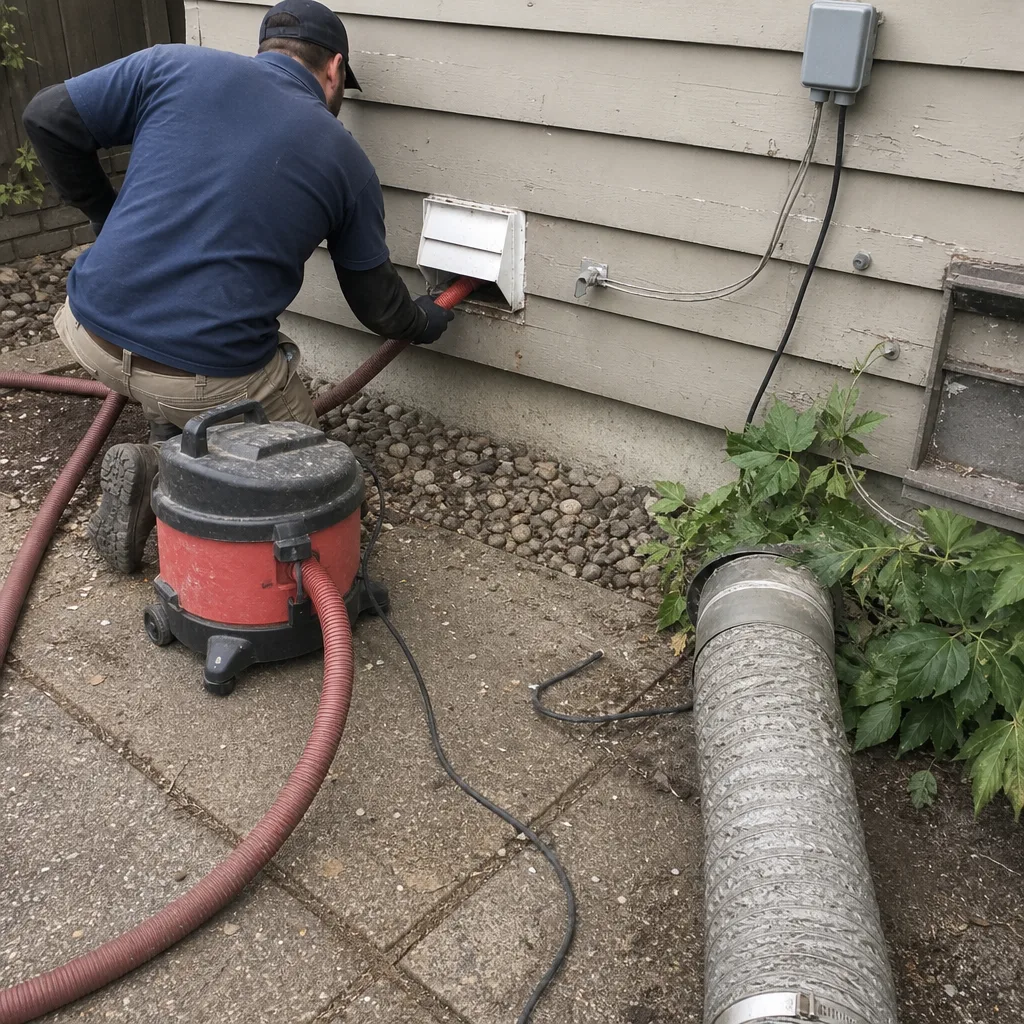 Before
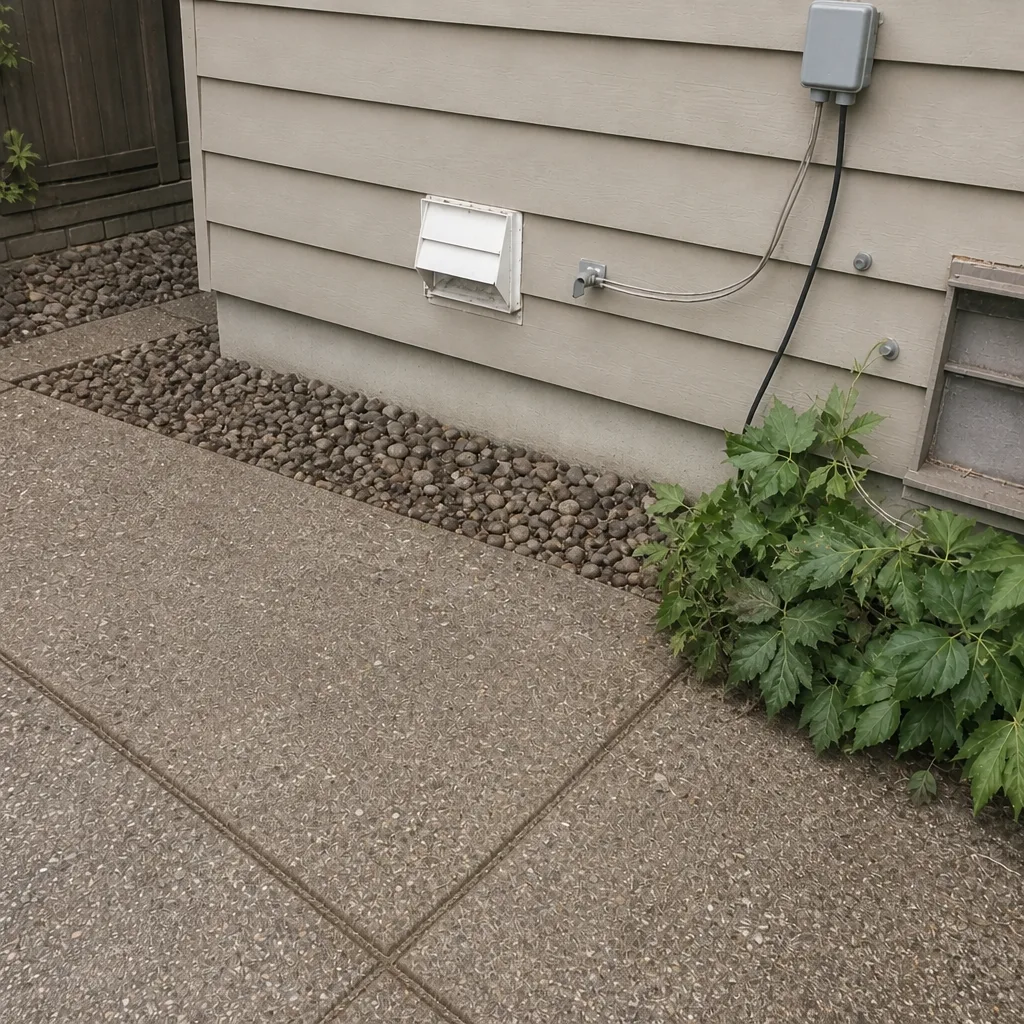 After
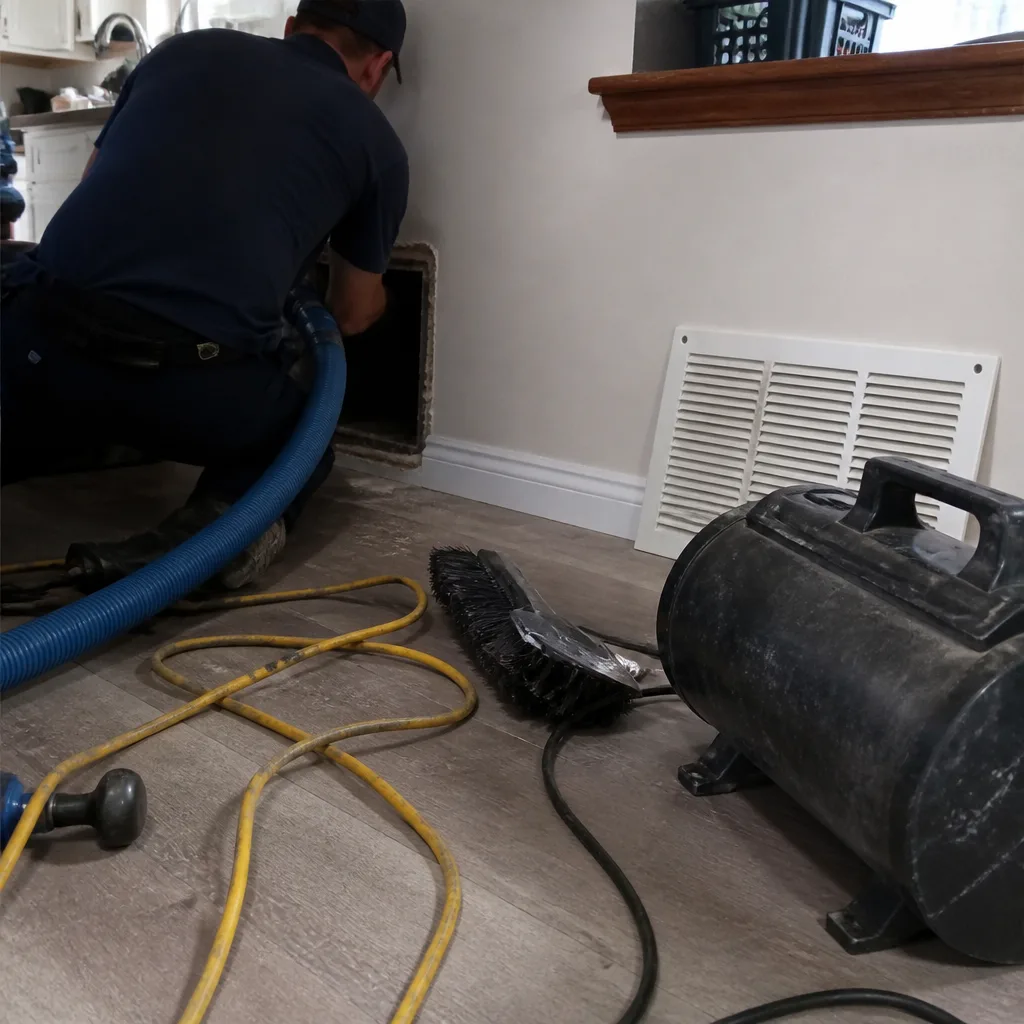 Before
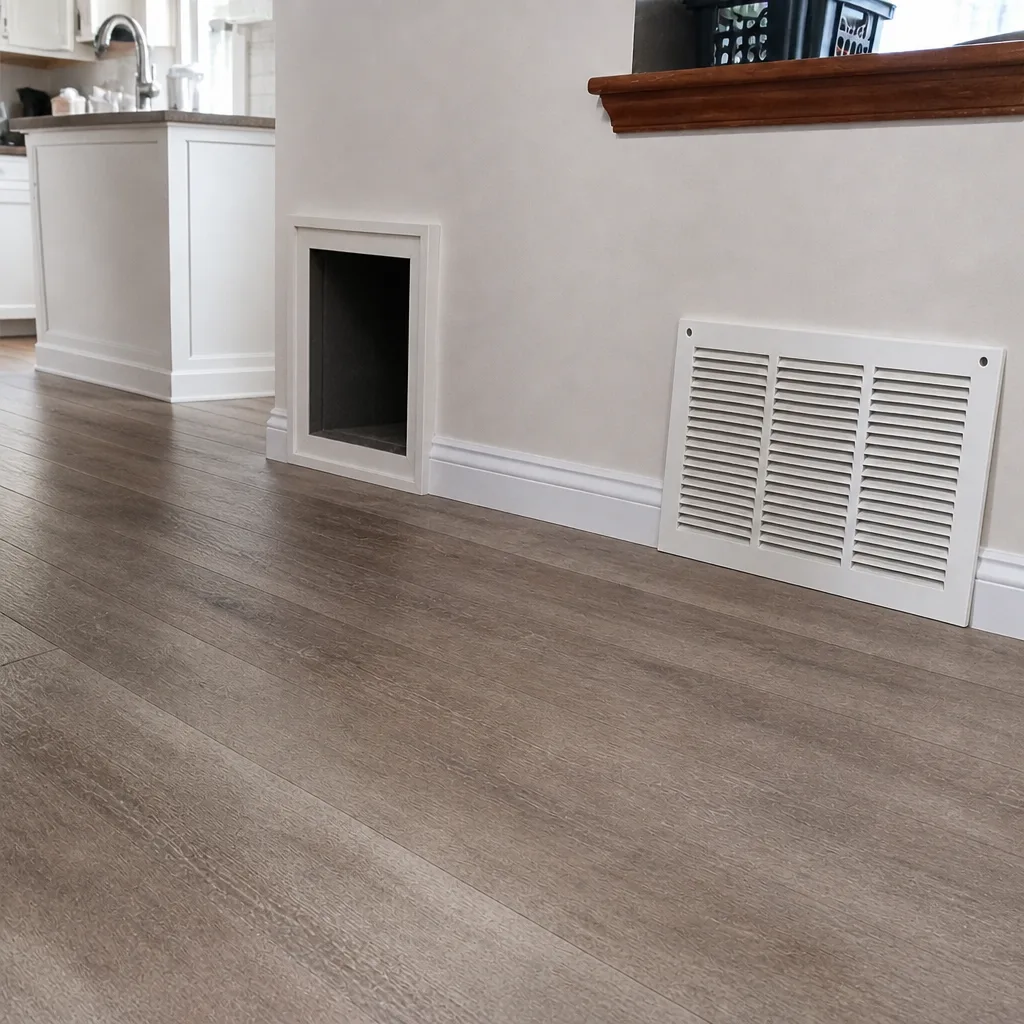 After
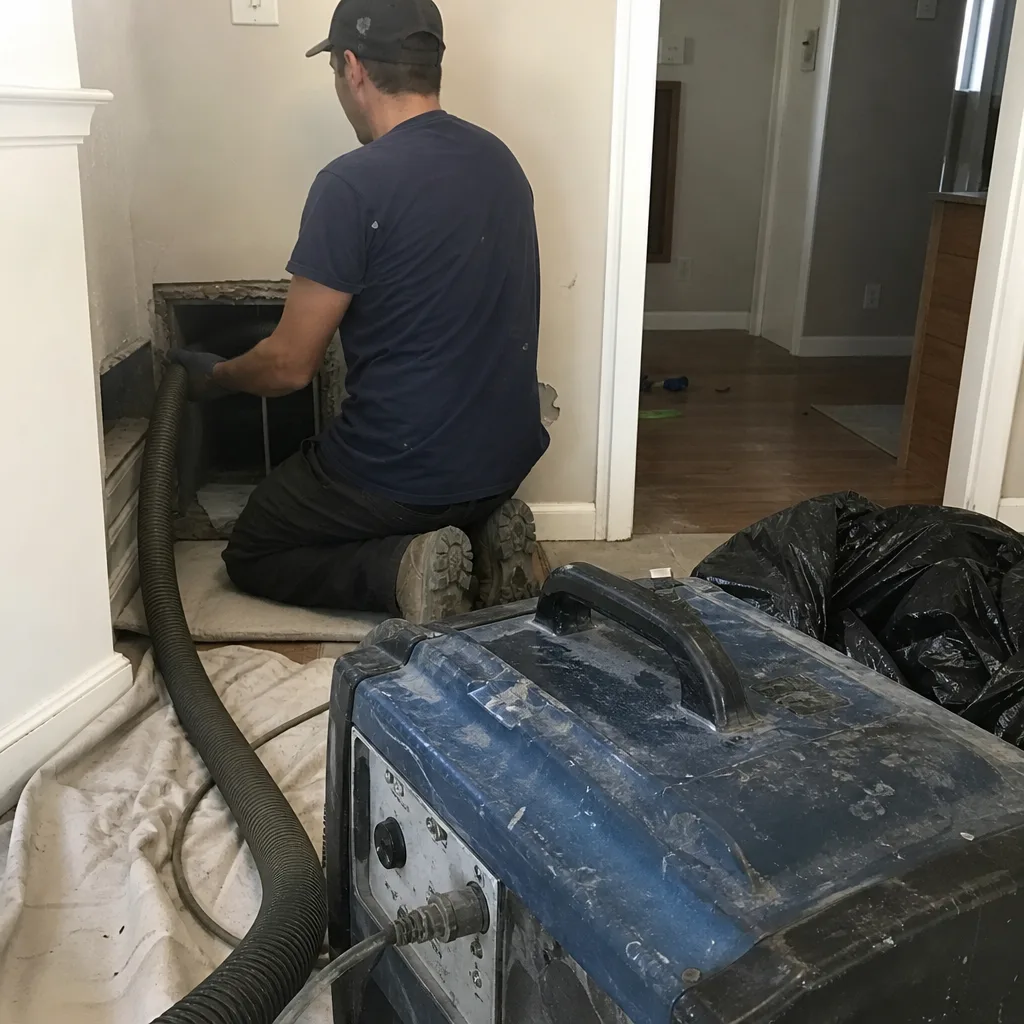 Before
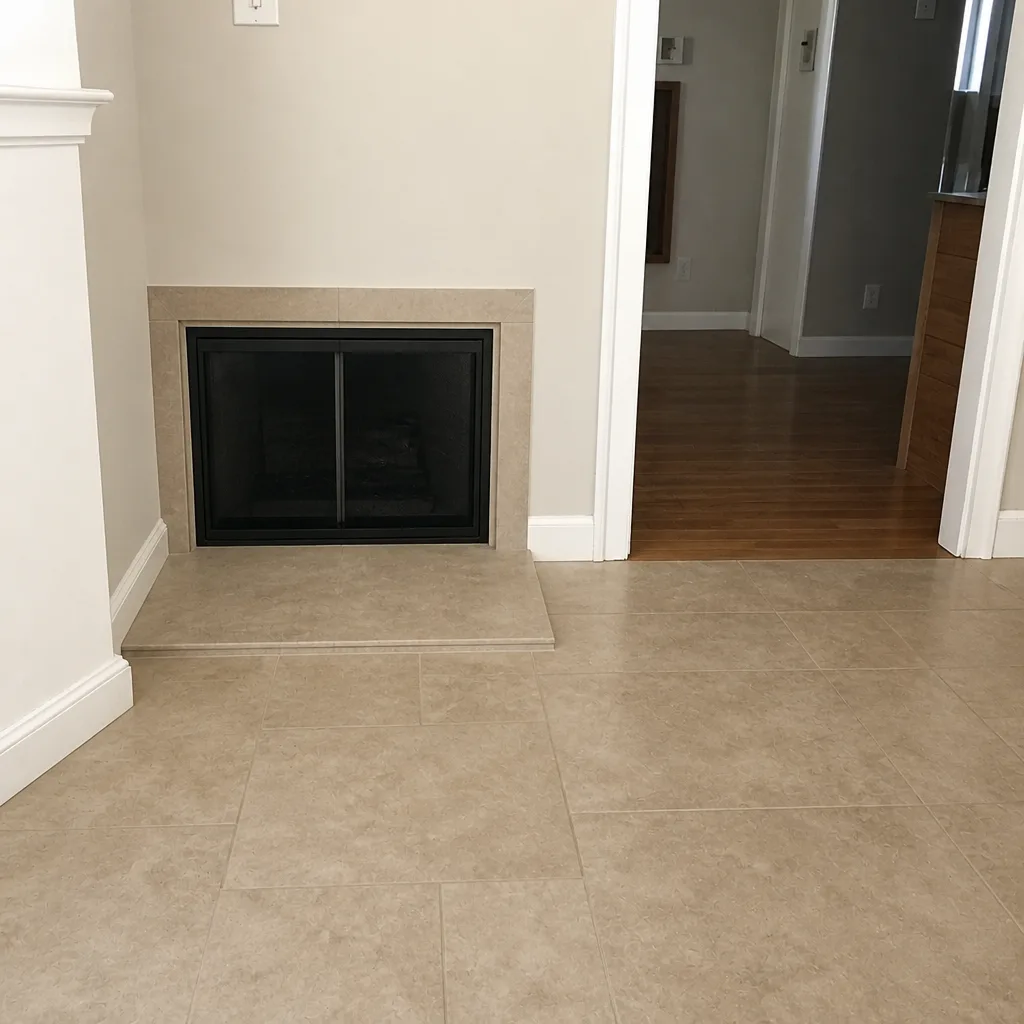 After
When to Call a Professional
Call a professional when you can’t verify what was done during your last cleaning, when dust returns within weeks, or when odor persists after a documented service. Call sooner if you see visible mold growth inside the ductwork, notice water staining around the air handler, or suspect pest contamination. If your ductwork has never been cleaned and you’ve just finished a renovation or moved into a home with unknown duct history, a professional scope and photos are worth more than another guess. And if you’re managing a rental or light-commercial property, professional documentation protects you. Marysville Air Duct Cleaning Co offers free estimates in Marysville. Call (888) 847-8751. We answer 24/7. Fast dispatch from 7am to 7pm, Sunday through Friday. Our technicians have up to 10 years of experience, and we work with professional-grade Rotobrush contact-cleaning and Nikro HEPA-rated negative-air equipment so the work is verifiable, not just claimed.
Frequently Asked Questions
Air duct cleaning in Marysville is priced per system by written estimate rather than per vent, so the range reflects your home’s duct layout, the number of systems, and whether the return side and air handler are included. A whole-system job with contact cleaning, HEPA containment, and photos typically sits above a blower-only quote because the method is different. We set one flat price per system before work starts, so there’s no bait-and-switch once a technician is on site. Call (888) 847-8751 for an exact quote. Estimates are free.
Low quotes usually reflect a blower-only method that skips the return-air side and the air handler, and often skips HEPA containment altogether. That’s a smaller job, not a better price. When you compare quotes, ask what equipment the contractor uses and whether the return side and before-and-after photos are included. Call (888) 847-8751 to talk through what a complete job involves. Estimates are free.
Before-and-after photos of your own ducts, return plenum, and air handler are the clearest proof. Contact cleaning with a brush system physically agitates the duct wall, and you can verify the result by looking inside a register after the job. Ask for photos before you book. Call (888) 847-8751 for a free estimate that includes a documented scope.
There’s no fixed interval that fits every home in Marysville. Homes with pets, allergy-sensitive occupants, recent renovations, or ductwork routed through damp crawlspaces tend to need it more often than a clean home with a well-maintained filter. The better test is symptoms: dust returning quickly, odor, or uneven airflow. Call (888) 847-8751 for a free estimate and a scope tailored to your home.
The most likely cause is an incomplete cleaning, especially a skipped return-air side or a blower-only method that left debris in the system. A re-clean from a contractor using contact brushes and HEPA-rated containment usually solves it. If dust comes back even after a verified full cleaning, look for duct leaks or a disconnected run. Call (888) 847-8751 to schedule an inspection and free estimate.
Most Marysville homes need a better cleaning, not remediation. Remediation is for confirmed mold growth over significant area, water intrusion that reached the ducts, pest contamination, or heavy post-renovation debris. If you’re unsure which situation you’re in, describe the symptoms and we’ll help you sort it out. Call (888) 847-8751. Estimates are free, and we’ll tell you honestly when a re-clean is enough.
The Bottom Line
Most duct problems homeowners try to diagnose in Marysville aren’t duct defects at all. They’re the visible result of a cleaning that skipped the return side, stirred air instead of contacting surfaces, or ignored the leaks that let contamination back in. The way to fix it is to verify what was done, check the return and the air handler yourself, and hire a contractor who cleans with contact brushes and captures debris with HEPA-rated containment. Save remediation specialists for the genuine cases: confirmed mold, water intrusion, pest contamination. For everything else, a complete cleaning from a properly equipped contractor usually settles the question.
Contact us for a free estimate. Call (888) 847-8751. We answer 24/7. Fast dispatch from 7am to 7pm, Sunday through Friday. We’ll walk your system with you, show you what’s actually inside, and set one flat price per system before any work begins.
Written by the team at Marysville Air Duct Cleaning Co.